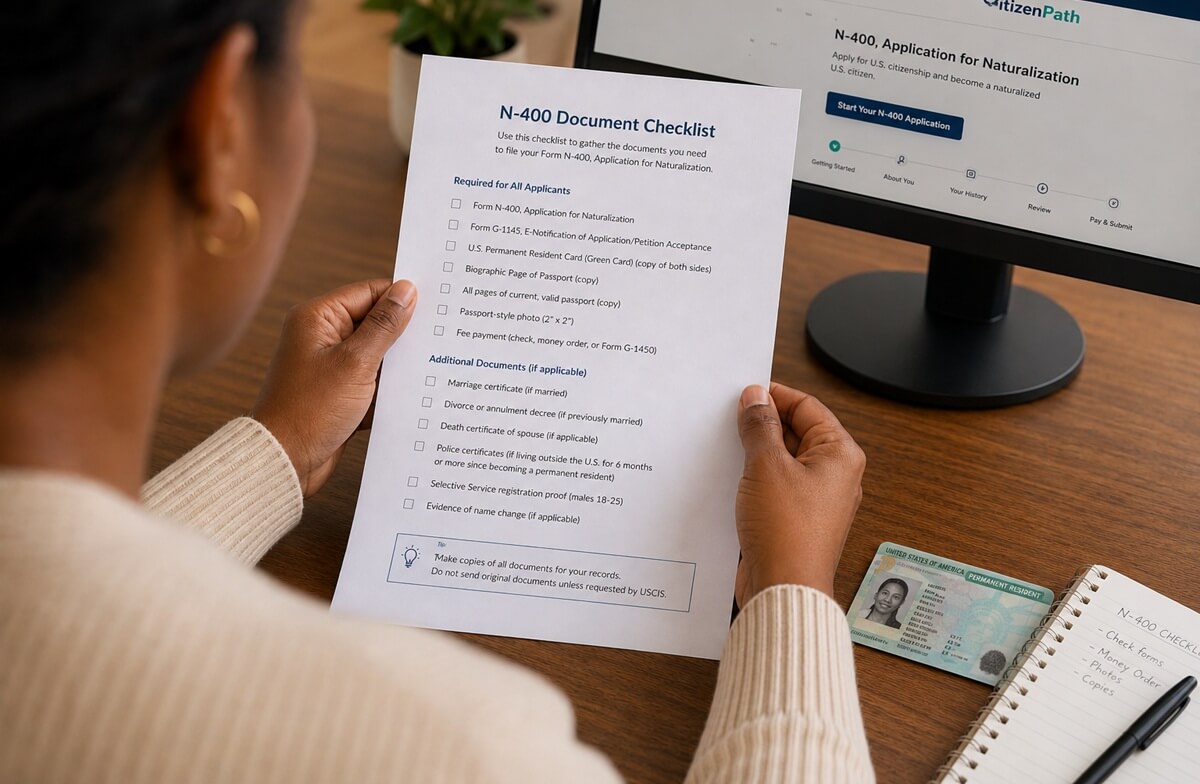
Applying for U.S. citizenship is a major milestone — and the preparation you do before you file can make the whole process go much more smoothly. Before you sit down to complete Form N-400, Application for Naturalization, it helps to know what information you'll need and what supporting documents USCIS will expect. This post covers the information and document categories most applicants will need to gather. It enables you to start the process prepared and organized, not scrambling.


Your N-400 Document Checklist Depends on Your Situation
There is no single N-400 document checklist that works for every applicant. The documents you need depend on your basis of eligibility, your travel history, your family situation, and the way you answer certain questions in the application. This guide walks you through what most applicants need to prepare — so you can start organized and avoid surprises.
Information You Need to Fill Out Form N-400
Before you can complete your application, you need to pull together some key records and personal history. USCIS asks detailed questions about your background, and having this information on hand before you start will save you a lot of time and frustration.
Your Permanent Resident Card (green card)
Your green card contains your Alien Registration Number (also called your A-Number) and the date you became a permanent resident. You'll need both to complete the application. If your green card is expired, you can still file the N-400. However, if it has been lost, stolen, or destroyed, you may need to replace your green card before applying for citizenship.Your travel history
USCIS asks about every trip you took outside the United States that lasted 24 hours or more during the relevant period. For most applicants, that's the past five years. If you're applying on the basis of marriage to a U.S. citizen, it's the past three years. This requirement catches many applicants off guard. Check your passport, credit card statements, and frequent flyer records to piece together your departure and return dates as accurately as possible. For guidance on how to handle this section, see our focused resource on reporting time outside the United States →Your address history
You'll need to list every address where you've lived for the past five years (or three years under the marriage provision). Have those dates and addresses ready before you start.Your employment and education history
USCIS asks for your job and school history covering the same period — organization names, locations, and the dates you were there. This information is used as part of a background check.Spouse and former spouse information
When applying on the basis of marriage to a U.S. citizen, you'll need information about your current spouse and any former spouses. This includes names, addresses, birth dates, marriage dates, immigration status, country of citizenship, and A-Numbers where applicable.Information about your children
USCIS asks you to list all of your sons and daughters — including those who are deceased, not living with you, or living abroad. You'll need each child's name, birth date, country of birth, and A-Number if applicable.Selective Service registration
Federal law requires most male permanent residents to register for the Selective Service between the ages of 18 and 26. If this requirement applies to you, you'll need to provide your registration number and date of registration. You can verify your status and print a confirmation letter at sss.gov. If you failed to register for Selective Service during that window, it's worth understanding how that affects your application before you file.Criminal history and citations
USCIS asks about any arrest, citation, or criminal offense in your history, including traffic tickets. You'll need to gather details related to any such incidents, including police reports, court dispositions, and sentencing records where applicable. Traffic citations generally do not create problems for naturalization, but USCIS requires full disclosure regardless. If you have any criminal history beyond minor traffic violations, consult with an immigration attorney before you file.
Document Categories to Have Ready at Filing
Once you've gathered your background information and completed the form, you'll submit supporting documents with your N-400. USCIS instructs applicants to submit all evidence at the time of filing. The exact list depends on your individual situation, but here are the primary categories most applicants need to address.
Proof of permanent resident status
You'll submit a copy of the front and back of your green card with your application.Proof of legal name
If your name has ever changed — through marriage, divorce, or a court order — you need to provide documents that trace the connection from your birth name to your current legal name.Support obligations
If you have children who do not live with you, or if you pay alimony to a former spouse, USCIS expects evidence that you're meeting those obligations.Filing fee payment
The N-400 filing fee is required at the time of submission. Certain applicants qualify for a reduced fee. If you use CitizenPath's naturalization service, we'll help you determine whether you're eligible.Passport photos
Two identical passport-style photos taken within 30 days of filing.Selective Service documentation
If the Selective Service requirement applied to you, include an official verification letter printed from the Selective Service website.
Don't Forget Any document in a foreign language must be accompanied by a certified translation into English. The translator must certify that the translation is complete and accurate.
Every applicant's situation is different, and it can be hard to know whether your checklist is complete. CitizenPath's Naturalization Application Package walks you through Form N-400 one question at a time and generates a personalized document checklist based on your answers — so you know exactly what to submit for your specific situation.

Additional Documents for the Marriage-Based Path
Some permanent residents qualify for citizenship through marriage to a U.S. citizen after just three years of continuous residence. This accelerated path has additional document requirements to establish eligibility.
Proof of your spouse's U.S. citizenship
You must show that your spouse has been a U.S. citizen for at least three years at the time you file. Acceptable documents include a U.S. birth certificate, a valid U.S. passport, a Certificate of Naturalization, a Certificate of Citizenship, or a Form FS-240 Consular Report of Birth Abroad.Proof of a valid marriage
You need to establish that your marriage is legally valid. Generally, USCIS looks to the law of the place where the marriage took place. A marriage certificate or official civil record is typically sufficient.Proof that prior marriages were legally ended
If either you or your spouse was previously married, you must show that all prior marriages were properly terminated before the current marriage. Divorce decrees, annulments, and death certificates are the most common documents used here.Proof of shared marital life
You must show that you and your spouse have lived in marital union for at least three years at the time you file. USCIS looks for documents that bear both spouses' names — things like joint bank statements, joint lease or mortgage agreements, insurance policies, birth certificates of shared children, or IRS tax transcripts for the past three years.
What to Bring to Your Naturalization Interview
Your N-400 document checklist doesn't end at filing. After USCIS processes your application, you'll be scheduled for a naturalization interview. At that appointment, you should bring originals of every document you submitted with your application. Originals are rarely required. However, if the officer wants to verify something, being able to produce them on the spot keeps your case moving. If you don't have them, your case could be delayed.
When Your Checklist Goes Beyond the Basics
For most applicants, the categories above cover what USCIS needs. But some situations require additional documentation. USCIS may require supplemental evidence if you have overdue taxes, have ever been arrested or cited, or have taken extended trips outside the United States (generally six months or more). Review the USCIS instructions or use a preparation service like CitizenPath that generates a customized checklist based on your specific answers. Learn more about the affordable Naturalization Application Package →
N-400 Document Checklist Frequently Asked Questions
CitizenPath Has Helped Thousands Achieve Citizenship
Preparing your N-400 document checklist takes time, but getting it right matters. Missing documents or incomplete information can delay your application, or worse, result in a denial. CitizenPath's step-by-step naturalization service makes the process manageable and affordable. We guide you through every question on Form N-400, flag potential issues before you file, and generate a customized document checklist based on your specific situation. If you run into questions along the way, our support team is here to help.
Want more immigration tips and how-to information for your family?
Sign up for CitizenPath’s FREE immigration newsletter and
SAVE 10%
on our immigration services