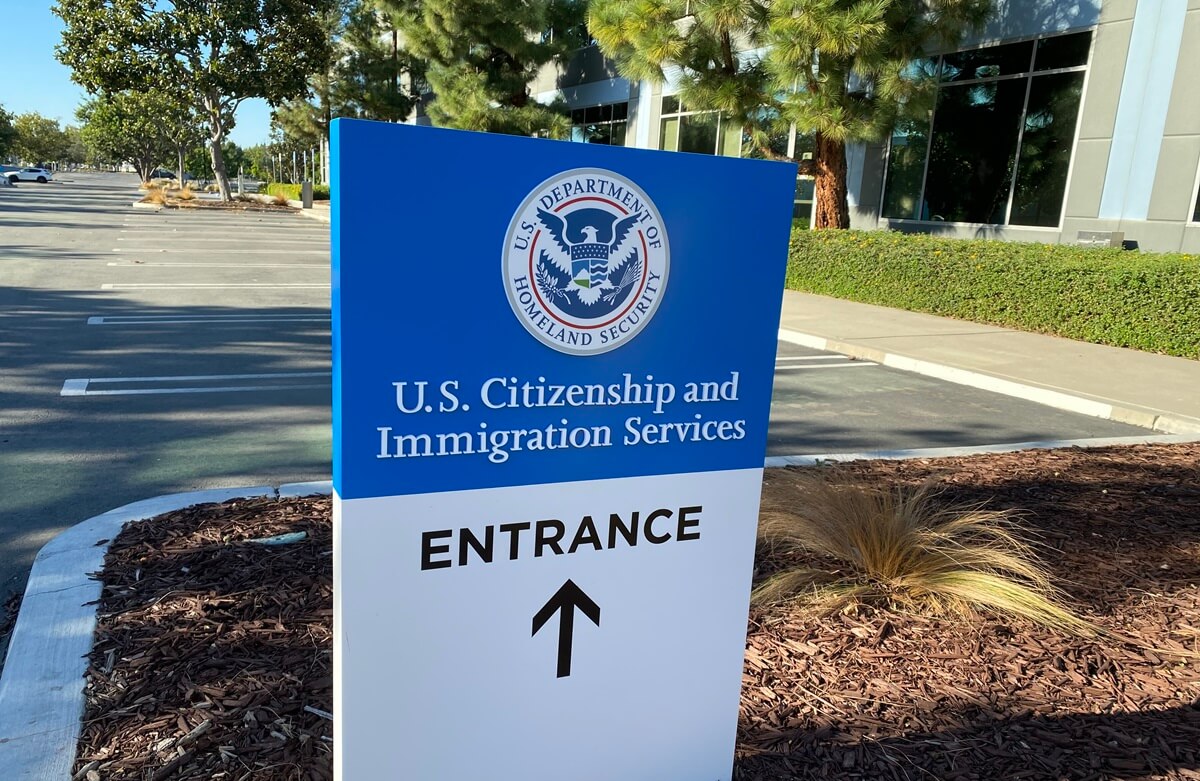
Waiting on U.S. Citizenship and Immigration Services (USCIS) is hard enough when life is calm. When a parent is gravely ill, a job offer is slipping away, or a card arrived with the wrong name printed on it, the wait becomes something else entirely. A USCIS expedite request may help in situations like these.
USCIS does move certain cases forward faster, but only for a narrow set of circumstances backed by real documentation. This guide covers who qualifies, exactly how to ask, and what to try when your situation does not fit the criteria.


What You'll Learn
- What an expedite request actually does to your case
- The five criteria USCIS weighs before granting one
- Three things to check before you request anything
- Exactly how and where to submit your request
- The evidence that makes or breaks a request
- Deadlines and emergency steps for travel documents
- Other ways to expedite a green card or benefit
A USCIS Expedite Request Asks the Agency to Move Your Case Ahead of Others
An expedite request is a formal ask for USCIS to decide your case out of turn, ahead of applications filed before yours. USCIS reviews every request individually and holds sole discretion over the outcome.
Hundreds of thousands of people are waiting at any given moment, so USCIS weighs the urgency and merit of each request against everyone else in line. A long wait alone is not a reason to expedite. Something in your situation has to be urgent, and you have to prove it.
One point catches many applicants off guard. A decision on your expedite request is not an approval or denial of your underlying application. USCIS is only deciding whether to take your case out of order. The agency also cannot decide your case until every processing requirement is finished, including biometrics, interviews, and background checks.

USCIS Uses Five Criteria to Decide a USCIS Expedite Request
USCIS lists five circumstances it may consider. The agency notes this list is not exhaustive, and meeting a criterion does not guarantee expedited treatment.
Severe Financial Loss to a Company or a Person
USCIS may expedite when a company or an individual faces severe financial loss, as long as the urgency is not the result of filing late or missing a deadline to respond. A company might show it is at risk of failing, losing a critical contract, or laying off employees. A person might show the loss of critical public benefits.
For an individual, USCIS states that job loss may be enough to establish severe financial loss, depending on the circumstances. Someone whose employer will terminate them on a specific date when their current work authorization lapses can document that date, the resulting loss of income, and what it puts at risk.
But there is a very important nuance. USCIS states that needing employment authorization, standing alone and without other compelling factors, does not warrant expedited treatment. Wanting to work sooner is not enough on its own, no matter how pressing it feels.
Emergencies or Urgent Humanitarian Situations
USCIS defines this as a pressing or critical circumstance related to human welfare. Examples include serious illness, disability, the death of a family member or close friend, and extreme living conditions caused by natural disasters or armed conflict.
USCIS adds an important caveat. Some benefits are humanitarian by nature, such as asylum applications and humanitarian parole requests. Filing one of those does not by itself justify an expedite. You still need evidence of a separate, time-sensitive factor.
A Nonprofit Organization Furthering U.S. Cultural or Social Interests
A nonprofit designated by the Internal Revenue Service (IRS) may request expedited treatment for a beneficiary. The organization has to show an urgent need tied to that specific person's role, not simply to the organization's mission.
USCIS gives examples such as a professor needed for an imminent cultural program or a religious organization that urgently needs one person's skills to keep a social outreach program running.
Government Interests
Federal, state, tribal, territorial, and local governments may request expedited processing when a case involves public interest, public safety, national interest, or national security. Someone with authority to speak for the agency has to make the request, and the stated interest must be pressing and substantive.
Clear USCIS Error
USCIS may expedite when the agency made an obvious mistake and correcting it is urgent. The classic example is an Employment Authorization Document printed with wrong information that keeps the holder from working.

Check Three Things Before You Expedite a USCIS Request
USCIS asks you to rule out three things first. Skipping these steps wastes your time and the agency's.
- Check current processing times. Compare your receipt date against the posted USCIS processing times for your form and office. If your case is still within normal range, an expedite request is unlikely to succeed.
- Check your case status for pending actions. Look at your USCIS case status online. If USCIS is waiting on you for biometrics or a Request for Evidence, finish that first. Your case cannot move until you respond.
- Check whether premium processing exists for your form. USCIS will not consider a discretionary expedite request for any form where premium processing is available, with one narrow exception for IRS-designated nonprofits.
USCIS also asks you to make only one expedite request. Duplicate requests split staff attention and can slow down the very case you are trying to speed up.
How to Submit a USCIS Expedite Request
You generally may request an expedite once you have received your receipt notice. For most cases, follow these steps:
Gather your evidence first
Collect the documents that prove your urgent situation before you contact anyone. USCIS will ask about supporting documentation during the call.
Contact the USCIS Contact Center
Call 1-800-375-5283 and explain why you need expedited processing. Have your receipt number ready so staff can route the request to the office holding your file.
Submit through your USCIS online account instead, if you have one
If your account has secure messaging, select "expedite" as the reason for your inquiry and submit the request there.
Upload your evidence to your online account
If you have an account, upload supporting documents there in addition to calling. USCIS will ask you to confirm the upload. Requests that arrive without evidence get sent back with instructions.
USCIS generally responds to expedite requests submitted through the Contact Center. The agency does not usually explain its reasoning, so a denial rarely comes with a reason you can address.
Certain case types follow different procedures entirely, including adoption cases, asylum applications, humanitarian parole, refugee status, T and U nonimmigrant status, appeals with the Administrative Appeals Office, and benefit requests pending at USCIS offices outside the United States.
Your Expedite Request Needs Evidence, Not Just an Explanation
Evidence is what separates a granted request from a denied one. USCIS generally requires documentation, and the burden sits with you to prove that one or more criteria apply.
Write your request so an officer can verify every claim without hunting for it. A strong written request includes your full name, A-number, receipt number, and form type up front. It then names the specific criterion you are relying on and describes the facts in one or two short paragraphs, using dates, amounts, and named people or organizations. Attach a document for every factual claim you make. Most effective requests fit on a single page.
For travel-related requests, USCIS publishes the evidence it expects for common situations:
| Situation | Evidence USCIS Expects |
|---|---|
| Death of a family member or close friend | Letter from the funeral home or hospital, death certificate, or obituary, plus proof of your relationship to the person |
| Illness of a family member or close friend | Letter from a doctor, hospital, or clinic describing how critical the health issue is, plus proof of your relationship |
| Pressing or critical medical treatment | Letter from a doctor, hospital, or clinic documenting how critical the treatment is |
| Professional commitment | Letter from your employer on company letterhead, a meeting agenda, or an invitation showing why the commitment is critical |
| Wedding or personal commitment | Invitation or reservations. If the event belongs to someone else, add proof of your relationship and why you must attend |
| Academic commitment | Letter from the school, a curriculum, or an agenda showing why the commitment is critical |
The same standard applies outside travel cases. A hospital letter beats a description of a hospital visit every time. If you are also preparing supporting documents for your underlying application, our guide to the USCIS cover letter covers how to organize a filing so an officer can follow it.
Travel Documents Follow a Separate Timeline and Emergency Process
USCIS applies its own timing rules to Form I-131, Application for Travel Document. Submit your expedite request at least 45 days before you plan to leave the United States. If you must travel within 15 days, use the emergency travel process instead.
USCIS considers expedited travel processing when there is a pressing or critical need to leave the country. That covers unexpected events like a funeral, and it also covers planned events when normal processing will not deliver the document in time. For a planned event, USCIS will look at whether you filed on time and responded promptly to any request for evidence. Traveling solely for vacation does not qualify.
If your need falls inside that 15-day window, you may request an emergency appointment at a USCIS field office.
Gather evidence of the emergency
Bring proof of a death, hospital records, or a doctor's letter. Without documentation that validates the urgency, you should not expect USCIS to approve the request.
Prepare Form I-131 carefully
Complete the application indicating a request for an Advance Parole Document. Errors and omissions cause delays that defeat the purpose. CitizenPath's Travel Document Application Package walks you through each question and tells you which documents to include. Our Form I-131 guide explains the application section by section.
Schedule an appointment at your local field office
Request an Emergency Advance Parole appointment through the USCIS appointment system. Bring your completed and signed Form I-131, supporting documents, a valid unexpired passport, the filing fee, evidence of the emergency, and two passport-style photos.
Other Ways to Expedite a Green Card When You Don't Qualify
Most people who want to expedite a green card do not meet the expedite criteria. Several other paths may still move your case, and some of them work better than a request USCIS is likely to deny.
Contact Your Congressional Representative
Every member of Congress has staff who handle casework with federal agencies, and many have a dedicated immigration liaison. They cannot decide your case or overrule USCIS. They can ask the agency for a status update and draw attention to a file that has stalled. Requests tied to a clear emergency or an unusually long delay tend to get the most traction.
File a Writ of Mandamus
A writ of mandamus is a lawsuit asking a federal court to order a government agency to act on a case it has left pending. It compels a decision, not a favorable one, so the outcome could be a denial. This route carries real cost and risk, and it calls for an attorney who handles these cases regularly. You can find an immigration attorney through our referral page.
Consider Humanitarian Parole
Humanitarian parole allows someone outside the United States to enter temporarily for an urgent humanitarian reason. It does not grant a green card or any permanent status. For families separated by a medical crisis or a similar emergency, it can provide a temporary reunion while the underlying case continues. These requests are complex, and USCIS grants them sparingly.
Prepare Early for the National Visa Center Stage
If your relative is immigrating from abroad, preparation is the one part of the timeline you control. Once USCIS approves the petition, the case moves to the National Visa Center, which collects documents before scheduling a consular interview. Families who gather those documents in advance move through this stage noticeably faster.
Have three years of tax returns filed for the Affidavit of Support, collect civil documents like birth and marriage certificates, confirm the passport stays valid at least six months past the intended entry date, and get immigration-required vaccinations done early. Our marriage green card guide walks through the full sequence, including what happens after the case leaves USCIS.
Use the Form-Specific Alternative to Your Situation
In some cases, there are form-specific alternatives to a USCIS expedite request. Here are some form-specific options that may get you the benefit you seek more quickly:
- Form I-90 — You do not have to wait for the new card to prove your status. The receipt notice extends your expired card, and that letter satisfies most employers and agencies. If your card was lost or stolen, you can get an ADIT stamp in your passport as temporary proof.
- Form I-751 — Processing can run well past a year. USCIS extends your conditional card automatically with the receipt notice. Many conditional residents also become eligible for naturalization while waiting and can file Form N-400 with the I-751 still pending. In fact, USCIS often combines the cases and handles both at one interview. For many, it results in quicker I-751 processing. Our citizenship through marriage guide explains the timing.
- Form N-400 — Spouses of U.S. citizen service members who are stationed outside the United States may qualify for expedited naturalization. USCIS publishes the requirements on its citizenship for military family members page, and the military help line can confirm whether you qualify.
Immigration Expedite Request FAQs
Getting It Right the First Time Beats Asking for Speed
A USCIS expedite request works when a genuine emergency meets solid documentation. For everyone else, the fastest case is usually the one filed correctly, because rejections and Requests for Evidence add months that no expedite request can win back.
CitizenPath provides simple, affordable, step-by-step guidance through USCIS immigration applications. Our service helps you file forms correctly so that you have you a high probability of avoiding mishaps, RFEs and other delays. See how it works →
Want more immigration tips and how-to information for your family?
Sign up for CitizenPath’s FREE immigration newsletter and
SAVE 10%
on our immigration services