
An immigration medical exam is a necessary part of immigrating to the United States and becoming a permanent resident (green card holder). Sometimes called a green card medical exam, the appointment is a routine part of the process to ensure public safety and remove the grounds for inadmissibility for intending immigrants. This article provides you with a complete overview of what to expect and how to prepare.


What You'll Learn
- Why do I need an immigration medical exam?
- Can I select the doctor who performs my exam?
- When should I schedule my appointment?
- What do I need to take to the medical exam?
- What should I expect at an immigrant medical examination for:
- Which medical conditions cause an eligibility problem?
- Can I get a waiver for the immigrant vaccination requirement?
- How much will the exam cost?
- What happens next?
Purpose of an Immigration Medical Exam
Certain diseases of public health significance make an individual inadmissible to the United States. That means it could prevent the applicant from getting a green card. The immigration medical exam is the process to remove these grounds of inadmissibility.
The medical grounds of inadmissibility, the medical examination of foreign nationals, and the vaccinations administered to foreign nationals are designed to protect the health of the U.S. population. The medical examination, the resulting medical exam report, and the vaccination record provide the information U.S. Citizenship and Immigration Services (USCIS) uses to determine if a foreign national meets the health-related standards for admissibility.
Any of these four basic medical conditions may make an applicant inadmissible on health-related grounds:
- Communicable disease of public health significance
- An immigrant’s failure to show proof of required vaccinations
- Physical or mental disorder with associated harmful behavior
- Drug abuse or addiction
The immigration medical examination is not a complete physical examination. Its purpose is to screen for certain medical conditions relevant to U.S. immigration law. The U.S. government doesn't require the doctor to evaluate you for any conditions except those the U.S. Public Health Service specifies for U.S. immigration purposes. Likewise, the government doesn't require the doctor to provide you with diagnosis or treatment even if they discover other issues related to your health. This examination is not a substitute for a full physical examination, consultation, diagnosis, or treatment by your primary health care provider.
CitizenPath can help you prepare the adjustment of status application package, but you'll need to attend the exam on your own. Therefore, it's important to know what to expect and how to prepare for your immigration medical examination.

Selecting a Doctor for your Exam
You won’t be able to go to any doctor for your immigration medical exam. The examination must be performed by a government-approved doctor. Outside the United States, the U.S. embassy or consulate will refer you to a "panel physician." Applicants applying inside the United States will go to a "civil surgeon." In both situations, they are doctors authorized to provide your exam. Panel physicians record the results of the exam on Form DS-7794 (Electronic Medical Examination for Visa or Refugee Applicant) or Form DS-2054 (Medical Examination for Visa or Refugee Applicant).
If you are applying for an immigrant visa through a U.S. embassy or consulate (known as consular processing), they will provide a list of panel physicians who have been certified by the Department of State. In most cases, you’ll have a choice of physicians. But it’s always best to check with the procedure at your local consulate. You may need to have your appointment notification before the panel physician will see you.
For adjustment of status cases, you must attend an examination with a civil surgeon in the United States. A directory of civil surgeons is also available. Civil surgeons record the results of the exam on Form I-693 (Report of Immigration Medical Examination and Vaccination Record). You must submit Form I-693 as a part of your adjustment of status application package.
When to Schedule an Immigrant Medical Exam
For consular applicants, the National Visa Center will tell you when it's time to schedule the appointment. You will need to complete the medical exam and vaccinations before your scheduled immigrant visa interview date.
For adjustment of status applicants, you are required to submit Form I-693 with your Form I-485. You may not opt to mail the medical exam results at a later date. If you do not submit Form I-693 as a part of your adjustment of status application package, USCIS may reject your entire application.
When applying inside the U.S., the exam results (Form I-693) that were properly completed and signed by a civil surgeon on or after November 1, 2023, does not expire and can be used indefinitely as evidence to show that the applicant is not inadmissible on health-related grounds. However, the immigration medical exam results are only valid while the I-485 application is pending. If the application a Form I-693 was submitted with is withdrawn or denied, that Form I-693 is no longer valid.

What to Take to your Medical Exam
In preparation for the medical examination, you will need to take several items. This list will vary based on the location of your exam. If you are attending an exam outside the United States, the U.S. embassy will give you specific guidance for your country. However, you will generally need to take the following items to an immigration medical exam:
- Valid passport or other government-issued photo identification
- Immunization/vaccination records
- Form I-693, Report of Medical Examination and Vaccination Record (if adjusting status)
- The required fee (varies by doctor)
- Required number of U.S. passport photos (if applying abroad - check with consular office)
- Report of the condition and any special education or supervision requirements (if anyone in your family is immigrating with learning disabilities)
- List of current medications (if you are being treated for a chronic medical condition or taking medications on a regular basis)
- Tuberculosis certificate from your doctor (if you’ve had a previous positive skin test for tuberculosis) proving that you were adequately treated
- Certificate of clearance signed by a doctor or public health official, proving that you were adequately treated (if you have had syphilis)
- If you have a history of harmful or violent behavior resulting in injury to people or animals, information that will allow the doctor to determine whether the behavior was related to a psychiatric or medical problem, or to drug or alcohol use
- If you have been treated or hospitalized for psychiatric or mental illness, or alcohol or drug abuse, written certification including the diagnosis, length of treatment, and your prognosis
Medical History
The doctor or a member of the doctor’s staff will ask questions about your medical history. Of particular interest to the doctor is any time you have ever:
- Stayed at a hospital or experienced significant events in your health history;
- Been put in an institution for a a chronic physical or mental condition; or
- Been sick or disabled so seriously that it resulted in a “substantial departure from a normal state of well-being or level of functioning.”
The doctor will also ask specific questions about habitual drug use. Applicants who are found to be drug abusers or addicts are inadmissible. Recovering drug addicts who are in remission, however, are admissible. Likewise, if the applicant is classified as a drug abuser or addict, the applicant can apply again for permanent residence if their drug abuse or addiction is in remission. If you have an history of drug abuse, even if it’s not in your medical records, consult with an immigration attorney before attending the green card medical exam.
Physical Examination
The doctor will then give you a physical examination. Typically, the physical exam includes looking at your eyes, ears, nose and throat, extremities, heart, lungs, abdomen, lymph nodes, skin, and external genitalia. The doctor will also order a chest X-ray and blood test to check for syphilis. Children will generally be excused from the X-ray and blood test requirement. If you are pregnant, contact your respective embassy or consular office to inquire about a postponement.
Mental Examination
The doctor will even perform a mental status exam that assesses your intelligence, thought, comprehension, judgment, affect, mood, and behavior. Applicants who have physical or mental disorders and harmful behavior associated with those disorders are inadmissible. The inadmissibility ground is divided into two subcategories:
- Current physical or mental disorders, with associated harmful behavior; and
- Past physical or mental disorders, with associated harmful behavior that is likely to recur or lead to other harmful behavior.
Vaccinations
The doctor will make sure that you have had all the required vaccinations. Some vaccines are expressly required by the Immigration and Nationality Act, and others are required because the Centers for Disease Control and Prevention (CDC) have determined they are in the interest of public health. Regardless, you must receive the following vaccinations before being admitted as a permanent resident:
- Mumps, measles, rubella
- Polio
- Tetanus and diphtheria toxoids
- Pertussis
- Haemophilius influenza type B
- Hepatitis B
- Varicella
- Influenza
- Pneumococcal pneumonia
- Rotavirus
- Hepatitis A
- Meningococcal
At the time of publishing this article, the list above is complete. However, new vaccinations may be added to the list over time. Not everyone requires all the vaccinations. USCIS maintains a chart of vaccinations that are considered medically appropriate by age.
Although the COVID-19 vaccination was required for a period, the Trump administration removed this requirement in 2025. Applicants are no longer required to obtain COVID-19 vaccinations.
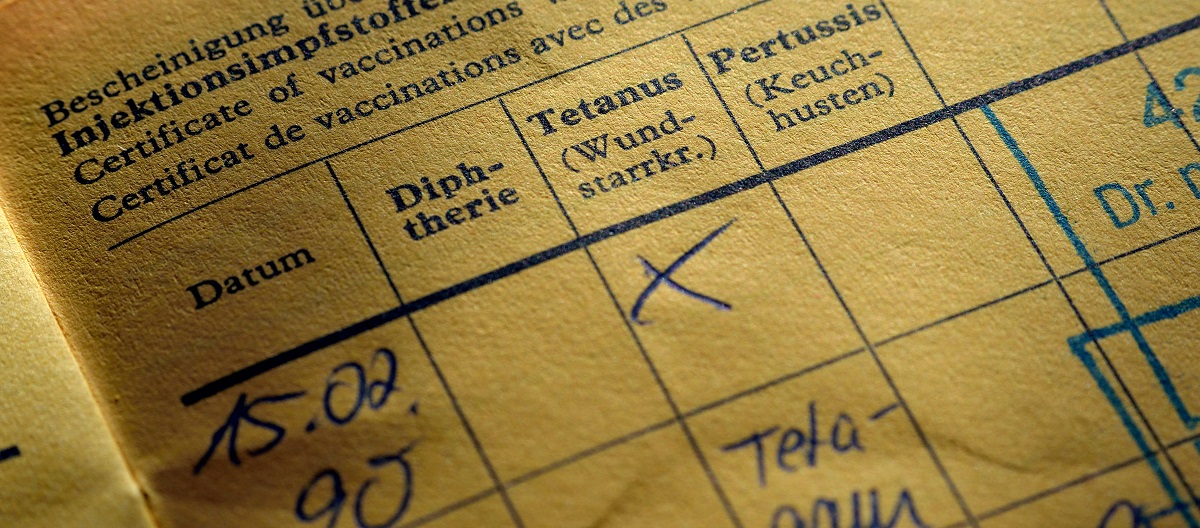
If you already have some or all vaccinations, take your vaccination reports to the doctor. The report will need a certified translation if it is not already in English. If you haven’t been vaccinated, the doctor will administer them. Depending on the type of vaccination, an additional visit may be required. Upon the recommendation of the physician, they may provide certain waivers of the vaccination requirement.
Medical Conditions That Can Trigger Inadmissibility
During your immigration medical exam, the doctor will classify any medical issues under one of two categories: Class A or Class B conditions. These classifications help immigration officials determine if a medical condition affects your eligibility for a green card.
- Class A Conditions are serious health issues that make a person inadmissible to the U.S. without a waiver. These include:
- Communicable diseases such as active tuberculosis or untreated syphilis
- Physical or mental disorders associated with harmful behavior
- Drug or alcohol addiction (substance abuse disorders)
- Failure to show proof of required vaccinations
- Class B Conditions are less severe. These are health issues that don’t make you inadmissible but may require monitoring. Examples include:
- Chronic medical conditions like diabetes or high blood pressure
- Well-managed mental health conditions
- History of a treated disease with no ongoing risk
If you are diagnosed with a Class A condition, you may need treatment, additional documentation, or a waiver before your immigration application can proceed.

Waivers of Immigrant Vaccination Requirement
For new immigrants who do not want to be vaccinated or cannot obtain a vaccine for certain reasons, there may be a waiver. However, you must meet the specific requirements, and it will take some effort. There are essentially two types of waivers: blanket waivers and religious/moral waivers. When USCIS grants blanket waivers, the applicant does not have to file a form or pay a fee. However, applicants must file a form and pay a fee when applying for a waiver on account of religious or moral objections. There is also no guarantee USCIS will grant the waiver. Carefully consider your desire to obtain a waiver.
Blanket Waivers for Vaccine Requirements
Blanket waivers of the vaccination requirements, may be applied if a vaccine is not medically appropriate or the vaccine is "not routinely available" in the country.
According to the USCIS Policy Manual, an immigration officer may grant a blanket waiver if the civil surgeon or the panel physician certifies that any vaccine is not medically appropriate for one or more of the following reasons:
- The vaccine is not age appropriate;
- The vaccine is contraindicated;
- There is an insufficient time interval to complete the vaccination series; or
- It is not the flu season, or the vaccine for the specific flu strain is no longer available.
They may also grant a blanket waiver in the case of a vaccination shortage or otherwise not routinely available in a country. However, if you are adjusting status to permanent resident, a U.S. doctor will perform your medical exam. Vaccines are widely available regardless of income, insurance or immigration status in the United States. Thus, blanket waivers are less likely to be granted.
Individual Waivers for Vaccine
Immigrants may also apply for individual waivers based on religious beliefs or moral convictions. Immigration officials will only grant the vaccine waiver if the individual is opposed to all vaccinations (not just certain ones) and if the opposition is based solely on religious or moral convictions.
The waiver of an immigrant vaccination requirement must satisfy three requirements. The applicant must be able to corroborate these three facts with documentary evidence. For this reason, it’s best to seek the assistance of an immigration attorney if you need the individual waiver for vaccines. Your waiver must satisfy all three of the following requirements:
You must be opposed to all vaccinations in any form;
You must show that you oppose all vaccinations, not just a single shot. Having received some vaccines does not automatically bar a waiver, but it makes approval harder; the officer will weigh your explanation. For example, you may now hold different religious or moral beliefs than when earlier vaccines were given, or you may be a child vaccinated routinely in an orphanage. These examples are not exhaustive. The officer can consider any credible circumstances and evidence.
Your objection must be based on religious beliefs or moral convictions; and
USCIS officers are trained to handle this area with sensitivity. They must balance the merits of your religious beliefs against the benefit to society as a whole.
The religious belief or moral conviction must be sincere.
You must demonstrate that you hold the belief sincerely. Even if these beliefs accurately reflect your ultimate conclusions about vaccinations, they must stem from religious or moral convictions, and must not have been framed in terms of a particular belief so as to gain the legal remedy desired, such as this waiver. The belief may not be political or scientific in nature.
Be prepared to cite the source of your religious beliefs or document past decisions affected by your moral convictions. However, you do not need to be a member of a recognized religion or attend a specific house of worship.
Applying for a Vaccination Requirement Waiver
You may request a waiver by submitting Form I-601, Application for Waiver of Grounds of Inadmissibility, along with supporting evidence and a filing fee ($1,050 at the time of writing this article).
We highly recommend that you obtain the assistance of an experienced immigration attorney that can help you prepare the form and assemble appropriate evidence for your case. You will likely submit a sworn statement articulating the exact nature of your religious belief or moral conviction against vaccines. The statement should also explain how those beliefs would be violated or compromised by complying with the vaccine requirement. Other evidence that corroborates your statement and the facts submitted in Form I-601 are necessary.
Special Instructions for K-1 Fiancé(e) Visa Entrants
If you entered the United States on a K-1 fiancé(e) visa, you already completed a medical exam with a panel physician abroad. In most cases, USCIS confirms you do not need to repeat the entire medical exam when filing Form I-485 for adjustment of status.
Do K-1 Applicants Need a New Immigration Medical Exam?
Typically, K-1 entrants who are adjusting status do not need a new exam provided that:
- The overseas medical exam is still valid (generally within one year),
- There were no Class A medical conditions, and
- The vaccination record (Form DS-3025) was properly completed.
If the above conditions are true, USCIS will generally accept your prior immigration medical exam.
What If Vaccinations Were Incomplete?
K-1 applicants and immigrant visa applicants are subject to the same vaccination requirements. However, K-1 entrants are sometimes allowed to complete certain vaccine doses later.
If your overseas medical shows missing or incomplete vaccines, you typically do not need a full new exam. Instead, a U.S. civil surgeon can complete only the vaccination portion of Form I-693 to document the updated vaccines.
You would then submit the sealed I-693 vaccination record with your adjustment of status application.

Cost of Immigration Medical Exam
Costs for immigration medical exams can vary significantly based on the country where it will be performed and the specific doctor. Prices can vary from $100 to over $400. The U.S. government doesn’t set a standard fee. The cost will depend on the doctor you visit. Therefore, check with a few doctors to find out how much each one charges for the immigration medical exam.
You may also need to consider the indirect costs of the exam. In some cases, you may need to travel to the interview city early for the purposes of the medical exam.
Upon Completion
What happens after completing the examination depends on your location.
In some countries, the panel physician will send the results of the immigration medical examination (Form DS-7794 or Form DS-2054) directly to the U.S. embassy. In other countries, the doctor will give the applicant their medical exam results in a sealed envelope and an x-ray which the applicant must take to the interview.
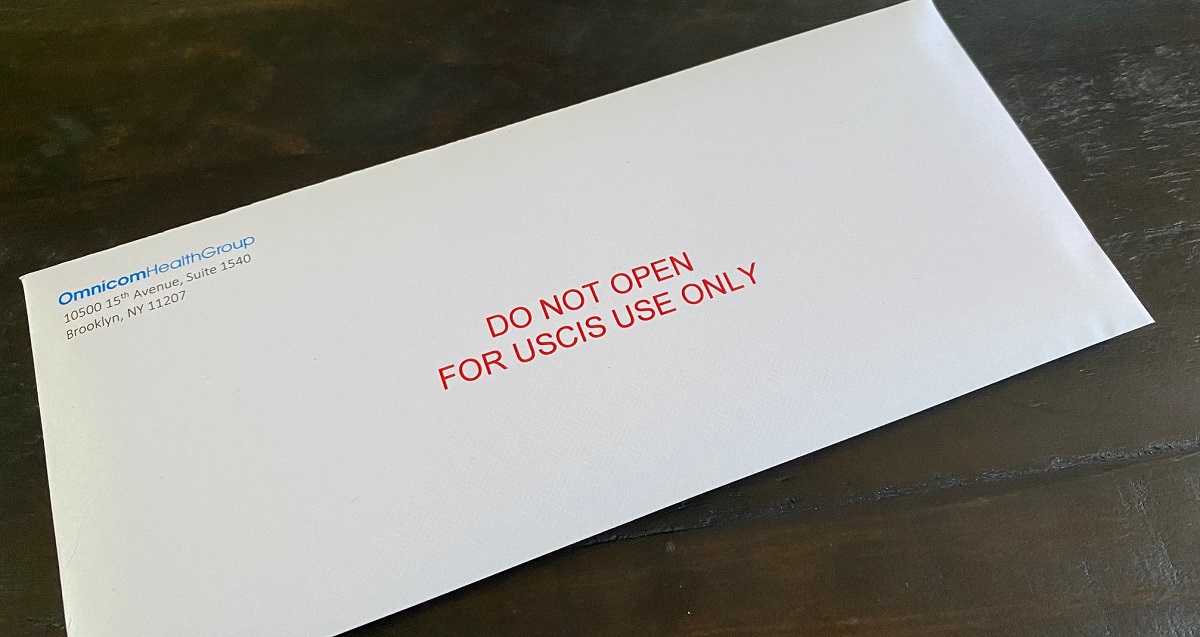
If your immigration medical exam is inside the United States, the civil surgeon will give you a completed Form I-693, Report of Medical Examination and Vaccination Record, in a sealed envelope. Do not open the envelope under any circumstance. Submit the medical exam along with Form I-485, Application to Adjust Status. If you have already filed your adjustment of status application, submit the envelope at the USCIS green card interview or as directed if you receive a Request for Evidence letter.
Frequently Asked Questions about Medical Exams
CitizenPath Has Helped Thousands Obtain a Green Card
Preparing your green card application doesn’t have to be overwhelming or expensive. CitizenPath simplifies the process with an affordable, step-by-step solution designed specifically for family-based immigration.
Our self-guided service helps you prepare immigration forms and all required supporting documents — just like a top immigration attorney would, but at a fraction of the cost. Along the way, you'll receive real-time alerts for common mistakes and helpful explanations.
We provide support for the Adjustment of Status Package (Form I-485), Immigrant Visa Petition Package (Form I-130), and several other USCIS forms.
Want more immigration tips and how-to information for your family?
Sign up for CitizenPath’s FREE immigration newsletter and
SAVE 10%
on our immigration services