
Parole in Place for Military Families: How It Works and Who Qualifies
Parole in place lets certain undocumented family members of U.S. service members stay in the country legally and pursue a green card without leaving. It applies only to people who entered without inspection. USCIS decides every request one case at a time. If you have a family member serving in the U.S. armed forces and you're trying to understand your options, this guide is for you.

Key Takeaways
- Parole in place authorizes a stay of one year at a time.
- A parole grant creates the lawful entry that adjustment of status requires.
- Spouses, widow(er)s, parents, sons, and daughters of service members may qualify.
- USCIS charges a parole fee for each grant, adjusted every year.
- USCIS decides each request individually, so the evidence matters.
What Is Military Parole in Place
Parole in place (PIP) is a federal immigration benefit available to certain undocumented family members of U.S. military personnel — active duty, reservists, and veterans. Under section 212(d)(5)(A) of the Immigration and Nationality Act, U.S. Citizenship and Immigration Services (USCIS) can grant PIP on a discretionary basis, allowing a family member to remain in the United States in an authorized status for a one-year period.
More importantly, PIP resolves a critical legal barrier. It allows a family member who entered the U.S. without inspection to become eligible to apply for a green card from inside the country, a process called adjustment of status. Without PIP, that path would be closed.
Military families are not the only people who can request parole in place. USCIS also accepts parole in place requests through the Family Reunification Task Force process. This page covers the military policy.
Why Military Families Need Parole in Place
Section 245(a) of the Immigration and Nationality Act requires a lawful entry before a person can apply for adjustment of status. Someone who crossed the border without inspection at a port of entry does not meet that requirement.
That leaves consular processing as the alternative. The family member returns to their home country and applies for an immigrant visa at a U.S. embassy. Departing after a long period of unlawful presence generally triggers a bar on returning. The bar runs three years or ten years, depending on how much unlawful presence accrued.
For a military family, that means separation during a deployment or a permanent change of station. USCIS created the military parole in place policy to address it, issuing guidance in November 2013 and a follow-up memo in November 2016.
A Parole Grant Solves One Problem and Leaves Others in Place
USCIS issues a Form I-94 arrival/departure record as evidence of parole. That record documents a lawful entry, which is what section 245(a) requires. In other words, it is the reason parole in place opens a path to adjustment of status.
A grant also resolves inadmissibility under section 212(a)(6)(A)(i) of the Immigration and Nationality Act. That section covers a person present in the U.S. without an admission or parole.
It does not do more than that. Other grounds of inadmissibility still apply, and the family member must still qualify to adjust status on every other point.
| What a parole grant does | What it does not do |
|---|---|
| Authorizes a stay of one year, renewable | Grant permanent residence or any immigration status |
| Documents a lawful entry through Form I-94 | Resolve grounds of inadmissibility beyond unlawful entry |
| Resolves inadmissibility under INA 212(a)(6)(A)(i) | Authorize employment on its own |
| Makes the person eligible to request a work permit | Continue after the person departs the United States |
Work authorization is a separate request. According to the USCIS Policy Manual, parole does not carry employment authorization with it. A parolee who wants an employment authorization document (work permit), files Form I-765 and waits for a decision on that application.
The Policy Grew Out of One Family's Case
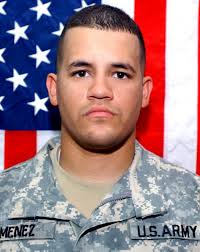
In May 2007, insurgents captured Army Specialist Alex Jimenez during an ambush south of Baghdad. Before deploying, he had filed a petition for his wife, Yaderlin. She had entered the U.S. from the Dominican Republic without inspection in 2001. That petition brought her to the attention of immigration authorities, and the government moved to deport her.
Returning to the Dominican Republic to apply for a visa would have triggered a ten-year bar. She could not have come back.
The case drew national coverage while Jimenez was still missing. Homeland Security Secretary Michael Chertoff stepped in and directed his department to end the removal case. Yaderlin Jimenez received her green card in the summer of 2007. The military identified her husband's remains in July 2008, and the Army promoted him to Staff Sergeant posthumously.
Intervention by a cabinet secretary resolved her case, which is not something any family can count on. The 2013 policy replaced that with a consistent rule.
Parole in Place Covers Five Relationships and Three Categories of Service
USCIS may grant parole in place to the spouse, widow(er), parent, son, or daughter of a service member in one of these categories:
- An active-duty member of the U.S. armed forces
- A member of the Selected Reserve of the Ready Reserve
- A veteran of active duty or the Selected Reserve, living or deceased, who did not receive a dishonorable discharge
Sons and daughters qualify at any age. USCIS does not limit this category to children under 21. USCIS also does not require the service member to be a U.S. citizen.
The applicant must be present in the U.S. without an admission. This requirement is strict. Arriving on a valid visa counts as an admission, even if that visa later expired. Someone who entered legally and overstayed cannot use parole in place. USCIS points those individuals toward deferred action instead.
Criminal history is not a separate eligibility bar, but it weighs heavily against approval. The 2013 USCIS memo sets the standard this way: for a spouse, child, or parent of an active-duty service member, absent a criminal conviction or other serious adverse factor, parole in place is generally appropriate.
USCIS Charges a $1,020 Parole Fee for Each Grant
The immigration parole fee is $1,020 for fiscal year 2026. The Department of Homeland Security began assessing that amount on January 1, 2026. It replaced the $1,000 fee that took effect on October 16, 2025 (90 FR 52085).
This fee changes every year. The One Big Beautiful Bill Act requires DHS to adjust it annually for inflation. Confirm the current amount on the USCIS fee schedule before you file.
Four details about this fee are easy to miss:
- It applies to each grant, not each application. A renewal is a new grant, so the fee applies again.
- You do not pay it when you file. USCIS decides the request first. If USCIS approves it and the fee applies, USCIS issues a conditional approval with payment instructions. The approval then depends on full and timely payment.
- USCIS cannot waive or reduce it. The Policy Manual states this directly.
- The exceptions are narrow. Ten statutory exceptions exist. They cover situations such as a medical emergency, an organ donation, or the funeral of a close family member. None describes a typical military parole in place request.
The parole fee is separate from any filing fee attached to the form itself. At this time there is no Form I-131 filing fee when applying for military parole in place.
How to Apply for Military Parole in Place
Parole in place is not automatic. The family member must apply and USCIS will evaluate each case individually. Everything below goes to USCIS as one package.
Confirm Eligibility
You must be in the U.S. without an admission. You must also be the spouse, widow(er), parent, son, or daughter of a qualifying service member or veteran.
Prepare Form I-131
The full title is Application for Travel Documents, Parole Documents, and Arrival/Departure Records. In Part 1, check Item 8.A. for an initial request or Item 10.H. for a renewal.
Gather Supporting Evidence
You'll need to submit paperwork that supports your request for military parole in place. Although your situation may require slightly different documents, a typical application package includes:
- Evidence of the family relationship: a marriage certificate, a birth certificate, papers ending a previous marriage, or proof of DEERS enrollment
- Evidence of military service: a copy of the front and back of the service member's military ID card, or a DD Form 214
- For a parent applying, evidence that the service member supports the request
- Two identical color passport-style photographs
- Evidence of any additional favorable factors you want USCIS to weigh
Mail the Application Package to USCIS
USCIS no longer accepts military parole in place applications at a local field office. It publishes the current address on its page for discretionary options for military members and their families. Confirm the address there first, since USCIS updates filing locations without much notice.
Wait for the Decision, Then Pay
USCIS decides the request before it collects anything. An approval arrives as a conditional approval with payment instructions, and the grant becomes final once payment clears.
DEERS is the Defense Enrollment Eligibility Reporting System, the military's record of a service member's enrolled family members.
The last item in step 3 carries real weight, because the decision is discretionary. Awards and commendations, community involvement, and letters of support all speak to it.
A Parole Grant Is the First Step Toward a Green Card, Not the Last
An approved parole grant and a Form I-94 let the family member move forward with an adjustment of status application. An immigrant visa also has to be available.
Immediate relatives of U.S. citizens, meaning spouses, parents, and unmarried children under 21, always have a visa available. Other family categories wait for a visa number.
The green card application itself is a separate filing with its own forms and its own fees. It generally includes Form I-485, an approved or concurrently filed Form I-130, Form I-864, and Form I-693. Form I-765 and Form I-131 are optional additions.
Start Your Application with Confidence
CitizenPath helps thousands of families prepare green card applications affordably and accurately. Our step-by-step software makes it easy to complete USCIS forms, avoid mistakes, and get approved quickly. You get real, human support when it matters.
Parole-in-Place FAQs
These answers cover what usually decides whether parole in place fits a family: cost, eligibility, and what a grant delivers.
Affordable Immigration Support
What Customers Say About CitizenPath
Selected reviews from verified customers collected through Reviews.io and Trustpilot.