
International travel can feel urgent. But for travelers with a grant of Deferred Action for Child Arrivals (DACA), it also carries real risk. Advance parole for DACA may allow temporary travel outside the United States and return without automatically losing DACA. However, approval is discretionary, reentry is never guaranteed, and recent policy changes have increased scrutiny, costs, and uncertainty.


What You'll Learn
- Who Can Request Advance Parole for DACA
- How to Apply for Advance Parole through DACA
- Supporting Documents for DACA-based Advance Parole
- New Fees You Must Plan For
- Adjusting Status to Permanent Resident with Help from Advance Parole
- Risks of Traveling on Advance Parole for DACA
- Urgent Travel Requests at Higher Risk Now
Who Can Request Advance Parole for DACA
DACA recipients cannot travel abroad for just any reason. Trips for vacation, weddings, or general family visits do not qualify for advance parole with DACA. Travel is considered only when it fits specific, limited purposes.
Before requesting an advance parole travel document, you must first have an approved DACA status. Leaving the United States without advance parole, can result in losing DACA eligibility. USCIS generally considers advance parole for DACA only for the following reasons:
- Humanitarian
Travel for urgent, compelling, or sympathetic reasons. Examples include receiving medical treatment, attending a funeral, visiting a seriously ill relative, or addressing other critical family emergencies. - Educational
Participation in approved study-abroad programs or academic research that requires travel outside the United States. - Employment
Overseas work-related travel such as assignments, conferences, trainings, interviews, or meetings essential to your job or career development.
Because advance parole is discretionary and international travel carries risk, DACA recipients should seek an individualized risk assessment before applying. Speaking with an experienced immigration attorney can help you understand how your history may affect travel and reentry.

How to Apply for Advance Parole through DACA
You request advance parole using Form I-131, Application for Travel Document. Approval depends on the strength of your evidence and your overall immigration history. Most applications include:
- Prepared and signed Form I-131
- Copy of your Employment Authorization Card (work permit)
- Proof that you have been approved for DACA (Form I-797)
- Two identical passport-style color photographs
- USCIS I-131 filing fee
You may use a single Form I-131 to request multiple trips. However, you must show that each trip is intended to serve a humanitarian, employment, or educational purpose and explain why you need to travel multiple times.
Supporting Documents for DACA-based Advance Parole
In addition to preparing the form, application packages should provide as much evidence as possible to justify the purpose of stated travel abroad. A short explanation helps, but documents carry the most weight.
Evidence for Trips with Humanitarian Reasons
When submitting a DACA advance parole request for a trip involving a humanitarian purpose, proper evidence includes but is not limited to the following:
- A letter from a medical professional explaining the reason for the need to travel abroad to obtain medical treatment;
- A letter from a hospital or treating medical professional explaining the relative’s ill condition; and
- A death certificate for a deceased relative
Evidence for Trips with Educational Reasons
For a trip involving an educational purpose, evidence includes but is not limited to the following:
- A letter from an educational institution explaining the purpose of travel abroad; and
- A document showing enrollment in a program or class and documents showing the applicant is required to travel for a program or class or will benefit from such travel.
Evidence for Trips with Employment Reasons
For a trip involving an employment purpose, appropriate evidence includes but is not limited to the following:
- A letter from an employer explaining the need to travel abroad; and
- A document showing an employment need, such as a conference or training program, and showing the applicant’s participation.
You should provide a statement, also known as a declaration, to clarify the purpose of the travel request. A declaration is not a substitute for the evidence above. However, it can help support a request for the AP travel document.
New Fees You Must Plan For
Advance parole is now more expensive than many applicants expect. The One Big Beautiful Bill Act (H.R. 1), which was passed into law in July 2025 created a new parole fee that went into effect on October 16, 2025. In addition to the Form I-131 filing fee, this parole fee is collected when you return to the U.S.
| Fee | When paid | Amount |
|---|---|---|
| Form I-131 filing fee | When you file | Varies by filing method |
| Parole reentry fee | When you return to the U.S. | $1,000 (after Oct 16, 2025) $1,020 (on/after Jan 1, 2026) |
Failing to budget for this fee can delay or block reentry.
Adjusting Status to Permanent Resident with Help from Advance Parole
Many DACA recipients originally entered the United States without inspection (EWI), meaning they crossed the border without being formally admitted by an immigration officer. This can block adjustment of status, even if you later qualify for a green card through a U.S. citizen family member. By contrast, a lawful entry occurs when you are inspected and admitted or paroled.
When a DACA recipient travels with approved advance parole and returns, they receive a new lawful entry and an I-94 arrival/departure record. This more recent entry may open the door to adjustment of status, if otherwise eligible. While this strategy has worked for many people in the past, current enforcement trends and policy uncertainty mean the risks are higher than before. Careful planning is essential.
Learn more about applying for a marriage-based green card in DACA Green Card: How Marriage to a U.S. Citizen Can Lead to Legal Status →
Risks of Traveling on Advance Parole
Even with approved DACA and advance parole, international travel carries risk.
DHS may revoke advance parole at any time, and reentry is never guaranteed. When you return, a Customs and Border Protection (CBP) officer will inspect you and decide whether to grant parole into the United States. For this reason, DACA recipients should understand the risks in their specific case before traveling abroad.
Consider speaking with an immigration attorney before traveling on advance parole for DACA, particularly if you have any factors that could increase risk:
- Ever been arrested or convicted of a crime;
- Ever been in immigration court proceedings;
- A current DACA grant that will expire during your intended travel dates;
- Ever been detained or refused entry at the border; or
- Ever left the United States after August 15, 2012, without being granted DACA and Advance Parole.
Urgent Travel Requests at Higher Risk Now
Some travelers need to leave quickly due to a serious emergency. Historically, USCIS field offices sometimes granted emergency advance parole. However, recent reports show limits:
- USCIS field offices have denied emergency advance parole for some applicants who last entered without inspection (EWI).
- These denials appear policy-driven, even though the policy has not been publicly explained.
- Some applications for EWI entrants have still been approved, but outcomes vary.
Do not rely on emergency processing if you have an EWI history.
Using an AP Travel Document
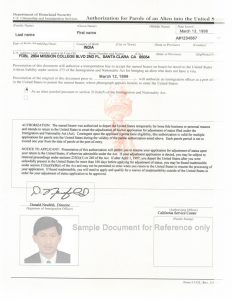
If approved, review your advance parole document immediately to confirm your name and biographic details, validity dates and any notations on travel limitations.
Carry these items when traveling:
- Advance parole document
- Passport and ID
- Proof of DACA approval
- Copies of your supporting evidence
Return before the document expires. Do not cut it close.
FAQs About Advance Parole for DACA Recipients
How CitizenPath Helps
CitizenPath provides simple, affordable, step-by-step guidance through USCIS immigration applications. Individuals, attorneys and non-profits use the service on desktop or mobile device to prepare immigration forms accurately, avoiding costly delays. CitizenPath allows users to try the service for free and provides a 100% money-back guarantee that USCIS will approve the application or petition. We provide support for the DACA Renewal Application Package (Forms I-821D, I-765 and I-765WS), Travel Document Package (Form I-131), and several other immigration services.
Want more immigration tips and how-to information for your family?
Sign up for CitizenPath’s FREE immigration newsletter and
SAVE 10%
on our immigration services