If your child was born outside the United States, you may need a Consular Report of Birth Abroad (CRBA) to document their U.S. citizenship. This official record proves that your child acquired citizenship at birth through a U.S. citizen parent.
The U.S. Department of State issues a CRBA as proof of citizenship. Therefore, it serves a similar purpose as a U.S. birth certificate for children born abroad. In this guide, you’ll learn what a CRBA is, who qualifies, and how to request one.


What Is a Consular Report of Birth Abroad (CRBA)?
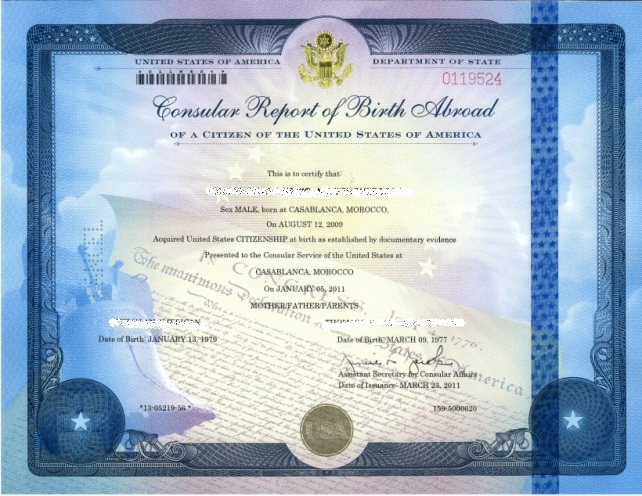
A Consular Report of Birth Abroad (Form FS-240) is an official document issued by the U.S. Department of State. It certifies that a child born outside the United States acquired U.S. citizenship at birth.
The U.S. Department of State explains that a CRBA is valid proof of citizenship for life. Parents typically use it to:
- Apply for a U.S. passport
- Enroll a child in school
- Prove citizenship for legal purposes
However, a CRBA is only available if the child meets citizenship transmission requirements under U.S. law.
Eligibility Requirements for a CRBA
Under current law, your child may qualify for a CRBA if at least one parent was a U.S. citizen at the time of birth and meets physical presence requirements.
The U.S. Department of State requires proof that the U.S. citizen parent lived in the United States for a specific period before the child’s birth.
General Eligibility Requirements
- At least one of the parents has to be a U.S. citizen at the time of the child’s birth;
- The child born abroad continues to be under the age of 18;
- The parent has to establish a relationship with the child, either biological or legal (including adoptive parents); and
- U.S. citizen parent must have been physically present in the United States.
Physical Presence Requirement Overview
| Parent Situation | Physical Presence Requirement |
|---|---|
| One U.S. citizen parent, one foreign parent | 5 years in the U.S. (2 after age 14) |
| Two U.S. citizen parents | At least one parent lived in the U.S. |
The Department of State determines eligibility based on immigration law and evidence provided during the application. For a closer look at physical presence requirements, see our post on acquisition of citizenship →
When Parents Should Apply for a CRBA
You should apply for a CRBA as soon as possible after your child’s birth abroad.
The U.S. Department of State allows CRBA applications for children under age 18. However, applying early makes the process easier. Applying soon after birth helps because:
- Documents are easier to obtain
- Evidence is more current
- Processing delays are less likely
If you wait too long, gathering proof may become more difficult.
How to Apply for a Consular Report of Birth Abroad
To request a Consular Report of Birth Abroad, parents must apply through a U.S. embassy or consulate in the country where the child was born. The process involves completing the required application, gathering supporting documents, and attending an in-person appointment with your child. Preparing in advance can help you avoid delays and ensure a smooth experience.
Complete Form DS-2029
The U.S. Department of State requires Form DS-2029, Application for Consular Report of Birth Abroad. Before completing the form, visit the website for your local U.S. embassy or consulate. Look for the CRBA section to review any location-specific instructions or requirements.
Typically, the child’s parents may choose to apply for a U.S. passport for the child at the same time they apply for a CRBA.
Gather Supporting Documents
You must provide evidence of the:
- Child’s birth
- Parent’s U.S. citizenship
- Parent’s physical presence in the U.S.
See below for more information on CRBA supporting documents →
Schedule an Appointment
Go back to the U.S. embassy or consulate website and request an appointment. You must appear in person at the U.S. embassy or consulate. Both the child and parents typically attend.
Attend the Interview
A consular officer reviews your documents and asks questions about eligibility. In many cases, you'll get an indication on approval the same day.
Receive the CRBA
If approved, the Department of State issues Form FS-240 as proof of citizenship.

Supporting Documents Needed for a Consular Report of Birth Abroad
The U.S. Department of State requires specific documents to verify eligibility. Typically, you'll need to submit the following documents to establish proof of the child's U.S. citizenship:
- Child’s foreign birth certificate
- Evidence of the parent(s)' U.S. citizenship and identity (such as a U.S. passport, U.S. passport card, Consular Report of Birth Abroad, Certificate of Naturalization, Certificate of Citizenship or timely filed U.S. birth certificate)
- Evidence of the U.S. citizen parent(s)' physical presence or residence in the United States prior to the birth of the child (such as school, employment, tax, bank, and medical records, utility bills, rent receipts, affidavits or other official public documents)
- Parents’ marriage certificate (if applicable)
- Evidence previous marriages have been terminated (if applicable)
The consular officer may request additional documents if needed.
How Long Does a CRBA Take?
Processing times vary by embassy or consulate. The U.S. Department of State does not publish a standard timeline. However, most applications take a few weeks after the interview. Delays can happen if:
- Documents are missing
- Evidence is unclear
- Additional review is required
To avoid delays, submit complete and organized documentation.
Proof of U.S. Citizenship If You’re 18 or Older
Individuals who were born abroad and acquired U.S. citizenship at birth cannot apply for a CRBA once they turn 18. Instead, they may request a Certificate of Citizenship as proof of their status. To do this, applicants who are physically present in the United States file Form N-600, Application for Certificate of Citizenship. In some cases, applying for a U.S. passport may also serve as evidence of citizenship.
CRBA Frequently Asked Questions (FAQs)
How CitizenPath Helps
A Consular Report of Birth Abroad is an essential document for children born outside the United States to U.S. citizen parents. It provides lifelong proof of citizenship and helps your child access important benefits. Applying early and preparing strong documentation can make the process smoother.
If you never obtained a CRBA, CitizenPath can help you apply for a Certificate of Citizenship.
CitizenPath provides simple, affordable, step-by-step guidance through USCIS immigration applications. Applicants, attorneys and non-profits use our affordable, step-by-step service to prepare USCIS immigration forms accurately. We provide support for the Citizenship Certificate Package (Form N-600) and several other USCIS forms.
Want more immigration tips and how-to information for your family?
Sign up for CitizenPath’s FREE immigration newsletter and
SAVE 10%
on our immigration services