
When you file Form I-751 to remove the conditions on your green card, USCIS requires evidence that your marriage was entered in good faith. One document that many conditional residents include is an I-751 affidavit — a letter of support written by someone who knows you and your spouse as a couple.
This post explains what an I-751 affidavit is, who should write it, exactly what it must include, and how to make it as strong as possible.


What an I-751 Affidavit Actually Is
An I-751 affidavit is a sworn letter written by a third party who has personal knowledge of your relationship. U.S. Citizenship and Immigration Services (USCIS) uses this letter as supporting evidence when evaluating whether your conditional green card was based on a genuine marriage — not one entered into solely to gain immigration benefits.
The person who writes the letter is called the affiant. By signing it, the affiant swears under penalty of perjury that everything they have written is true. In rare cases, USCIS may ask the affiant to testify in person about what they observed.
The I-751 affidavit is not required by USCIS. However, immigration attorneys widely recommend submitting two to four of them alongside your primary evidence. They are most valuable when your objective evidence has gaps — for example, if you and your spouse maintain some finances separately or if you moved frequently.
An Affidavit Supports Primary Evidence — It Does Not Replace It
Before you ask someone to write a letter, understand where affidavits fit in the overall evidence picture. USCIS weighs objective, documentary evidence more heavily than personal statements.
The strongest primary evidence of a good faith marriage includes:
- Joint tax returns filed together
- Joint bank accounts or financial accounts
- Jointly owned or leased property
- Health, life, or auto insurance listing both spouses
- Children born to or legally adopted by the couple
These documents demonstrate a shared life in concrete terms. An affidavit fills gaps and reinforces what your primary evidence already shows. It cannot substitute for weak or missing primary evidence.
If you are uncertain what documents to gather, see our guide on evidence for Form I-751 for a full list of over 30 options.

Who Should Write the I-751 Affidavit
The affiant should be someone who knows you as a couple — not just as individuals. USCIS is looking for first-hand observations, not general character praise. Strong affiants typically include:
- Close friends who have spent time with you both regularly
- Family members who have witnessed your relationship from the beginning
- Neighbors, coworkers, or colleagues who have observed your life together
- Religious or community leaders familiar with your lives as a couple
The affiant does not need to be a U.S. citizen. There is no citizenship requirement. However, they should ideally be local to you, since their ability to describe regular, in-person contact carries more weight than an overseas acquaintance who has only visited once.
The ideal affiant has known you since before your marriage and continues to have regular contact with you today. If possible, choose affiants who can speak to different aspects of your relationship — one who has seen you at family gatherings, and another who socializes with you regularly.
What the I-751 Affidavit Must Include
USCIS expects the letter to be typed, signed, and dated. It does not need to be notarized, but it must include a sworn declaration at the end. Every I-751 affidavit should cover the following points:
| Required Element | What to Include |
|---|---|
| Affiant's full name and address | Legal name and current mailing address |
| Date and place of birth | City, state or country, and date of birth |
| Relationship to the couple | Friend, family member, coworker, etc. |
| How and when the affiant met the couple | Specific context — e.g., met at work in 2019 |
| Frequency and nature of contact | E.g., "we have dinner together twice a month" |
| Personal observations of the relationship | Specific stories demonstrating genuine commitment |
| Sworn declaration | "I swear, under penalty of perjury, that the foregoing is true and correct to the best of my knowledge." |
| Signature and date | Hand-signed and dated |
What Makes a Strong Affidavit (and What to Avoid)
The most common mistake affiants make is writing vague, general statements. A letter that says "I believe they are a loving couple and their marriage is genuine" tells USCIS almost nothing.
A strong affidavit uses specific stories. For example:
"I have known Maria and James since their wedding in 2020. I see them at least twice a month — often for Sunday dinners or weekend outings. Last year, when James was hospitalized for two weeks, Maria coordinated his care around her work schedule and was present every evening. That experience showed me the genuine depth of their commitment."
That kind of specificity — names, dates, circumstances, and observed behavior — is what USCIS actually evaluates. Ask your affiant to think of two or three real moments that revealed the nature of your relationship and describe them plainly.
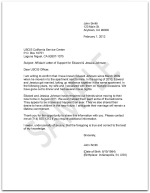
CitizenPath has prepared a downloadable I-751 affidavit sample you can share with anyone who agrees to write on your behalf. Use it as a guide, not a template to copy word for word. Each letter should reflect a unique relationship with the couple. Find the sample letter at the end of this article.
Using an Affidavit When Filing with a Waiver
If your marriage ended in divorce or your spouse passed away, you may still need to file Form I-751. In these situations, you file with a waiver of the joint filing requirement and must still prove that you entered the marriage in good faith.
An I-751 affidavit becomes especially important in these cases. It can help establish that the relationship was real and that the marriage ended due to circumstances — not because it was fraudulent from the start.

USCIS reviews petitions filed with a waiver more carefully. Anyone filing an I-751 waiver after divorce should consult an immigration attorney before proceeding, since USCIS scrutiny is higher and the stakes of a misstep are significant.

Download a Free I-751 Affidavit Sample
CitizenPath has prepared a downloadable I-751 affidavit sample you can forward to anyone willing to write a letter of support. The PDF includes the key points the writer should cover and a complete example letter.
Use it as a guide, not a script. Each letter should reflect the affiant's genuine, personal observations of your relationship. Specific anecdotes carry far more weight than general statements about the couple's character.
I-751 Affidavit — Letter of Support FAQs

CitizenPath Makes the I-751 Process Manageable
Preparing Form I-751 involves more than filling out a form. You need to gather strong primary evidence, organize your supporting documents, and understand what USCIS is actually looking for. CitizenPath provides step-by-step guidance that walks you through every part of the process — including which documents to include and how to organize your petition package.
Move forward with confidence. Start your Removal of Conditions Petition Package with CitizenPath today.
Want more immigration tips and how-to information for your family?
Sign up for CitizenPath’s FREE immigration newsletter and
SAVE 10%
on our immigration services


