
Advance Parole Document: How to Apply & How It Works
Advance parole is a travel authorization that lets certain non-citizens return to the United States after temporary international travel. It is issued by U.S. Citizenship and Immigration Services (USCIS) and requested through Form I-131, Application for Travel Documents, Parole Documents, and Arrival/Departure Records.
This document is especially important if you have a pending adjustment of status or another immigration application that could be considered abandoned if you leave the U.S. without permission. This page explains how the advance parole document works, who needs it, and how to apply.
Key Takeaways
- An advance parole allows certain non-citizens to travel abroad and return without abandoning a pending immigration application.
- You request an advance parole document by filing Form I-131, and USCIS may internally label the approval as Form I-512L.
- Many adjustment of status applicants receive advance parole through a combo card that also serves as a work permit.
- Advance parole allows inspection at re-entry, but does not guarantee admission, and travel rules vary by immigration status.
What Is an Advance Parole Document?
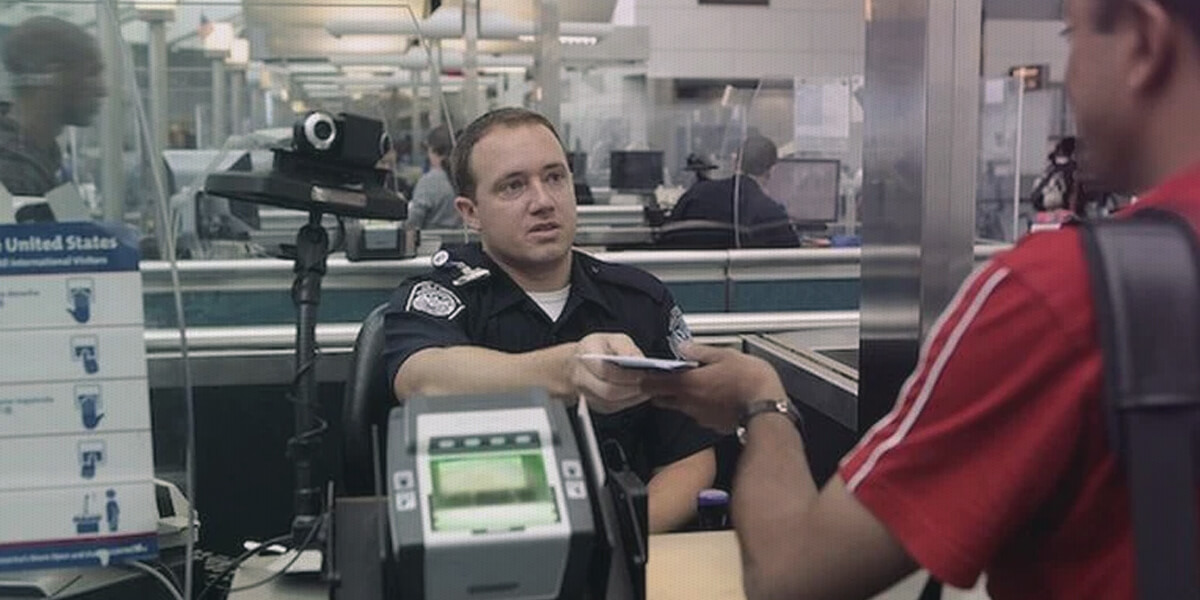
An advance parole document allows USCIS to pre-authorize your return to the United States after travel abroad. It is not a visa, but it serves as permission for U.S. Customs and Border Protection (CBP) to inspect you for admission when you return.
USCIS may refer to advance parole internally as Form I-512L, which is simply the government’s designation for the parole authorization. You do not file Form I-512L separately. If USCIS approves your request, the advance parole document you receive is considered your I-512L authorization.
Advance parole helps protect your pending immigration case while you travel temporarily outside the U.S.

Common Immigration Statuses That Use Advance Parole
Advance parole is used by several different groups, depending on their immigration situation. While the document works the same way, eligibility rules and travel risks vary by status.
Some of the most common situations include:
- Adjustment of status applicants: People with a pending green card application often use advance parole to travel without abandoning Form I-485. Learn more about advance parole for adjustment of status applicants →
- DACA recipients: Certain DACA recipients may qualify for advance parole for specific humanitarian, educational, or employment reasons. Learn more about advance parole for DACA recipients →
- Applicants for humanitarian benefits: This may include individuals with pending asylum-related or parole-based applications.
- Applicants with other pending USCIS benefits: Some employment- or family-based applicants may need advance parole while their case is pending.
Without advance parole, leaving the U.S. in these situations may cause USCIS to treat your application as abandoned. Because the rules differ by status, it’s important to understand how advance parole applies to your specific situation before traveling.

How Advance Parole Works When You Travel
Advance parole does one specific job: it allows you to leave the United States and return without abandoning your pending immigration application.
When USCIS approves advance parole, it pre-authorizes your return so you can be inspected by CBP at the border. Here’s the key distinction:
- USCIS approves advance parole before you travel
- CBP decides whether to admit you when you return
Advance parole does not guarantee entry. It simply allows CBP to review your case and decide whether you may re-enter the U.S. Most travelers with clean immigration histories are admitted without issue, but CBP still has final authority. In practical terms, advance parole protects your pending application, not your admission decision.
How to Apply for an Advance Parole Document
You apply for an advance parole document by filing Form I-131 with USCIS. Most applicants must include:
- A completed Form I-131
- Evidence of your current immigration status
- Proof of your pending application (such as Form I-485 receipt)
- Two passport-style photos, if required
- The appropriate USCIS filing fee (or fee waiver request, if eligible)
Processing times vary. Because travel before approval can be risky, it’s best to apply as early as possible.
If you want extra confidence when preparing Form I-131, CitizenPath provides clear instructions written for everyday people. The affordable service checks for mistakes and builds a tailored checklist so you know exactly what to submit. You pay only when you’re satisfied and ready to download your I-131 package.
Advance Parole and the Combo Card
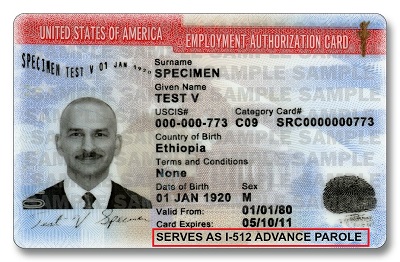
Many adjustment of status applicants receive a combo card, officially known as an Employment Authorization Document (EAD) with advance parole endorsement.
The card provides dual benefits:
- Employment authorization (work permit)
- Advance parole travel authorization
If your card says “Serves as I-512 Advance Parole” or “Valid for Re-entry”, it functions as your advance parole document. In these cases, you do not receive a separate paper travel document. Always confirm that your card includes advance parole language before traveling.
When You Should Not Travel on Advance Parole
Even with advance parole, travel may be risky if you have:
- Certain criminal convictions
- Previous immigration violations
- Pending removal or deportation issues
In these situations, CBP may deny admission. If you are unsure, delay travel until you speak to an immigration attorney about your specific situation.
Advance Parole Travel FAQs
Want more immigration tips and how-to information for your family?
Sign up for CitizenPath’s FREE immigration newsletter and
SAVE 10%
on our immigration services