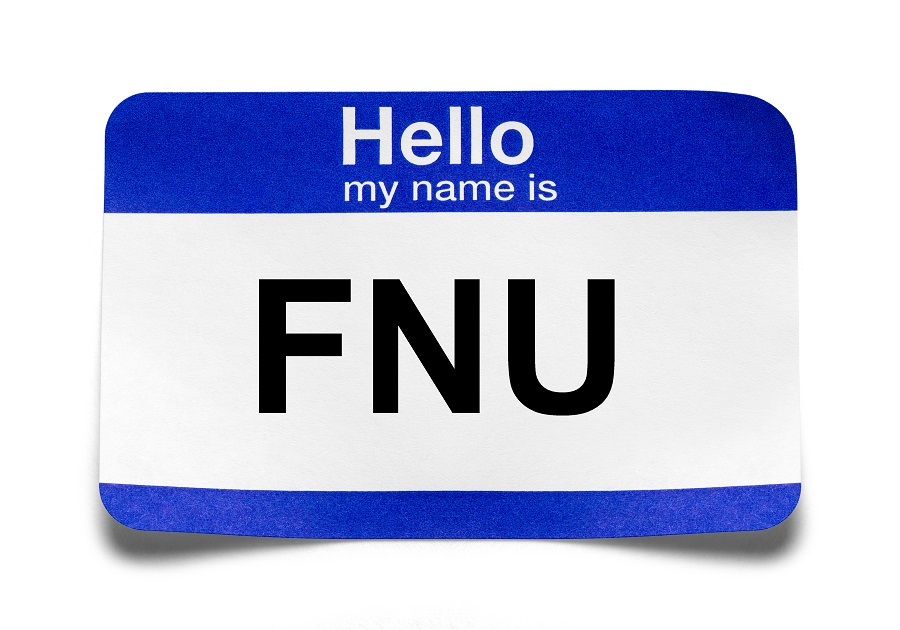
If you’ve ever looked at your immigration documents or official U.S. ID and noticed the name “FNU” where your first name should be, you’re not alone. Many immigrants encounter this confusing label and wonder what it means — and more importantly, how to fix it.
In this article, we will explain the meaning of “FNU” in a name, why it appears on U.S. immigration forms and ID cards, how it's often associated with individuals from countries like India and the Middle East, and how to correct it if it's causing problems with your identity or official records.


What Does “FNU” Mean in a Name?
“FNU” stands for “First Name Unknown.” It is not a name or title, it’s an abbreviation used by U.S. government systems when someone’s first name is missing or unrecognized during data entry.
This often happens when a person from a country with different naming conventions enters the U.S. immigration system. For example, some individuals only have one legal name (no first or last name), or they may use a single name in ways that don’t align with U.S. naming standards.
Why “FNU” Appears on Immigration Documents
In the U.S., official forms like those from U.S. Citizenship and Immigration Services (USCIS) or the Department of State require a two-part name structure: first name (given name) and last name (family or surname). If an applicant’s passport or documents list only a single name, U.S. systems may automatically assign:
- The single name to the last name field
- “FNU” (First Name Unknown) to the first name field
This typically happens when the individual fills out a form without separating their name into first and last parts, or when the system itself cannot interpret the name format.
Who Is Most Affected by the FNU Name Issue
People from regions where single-name usage is common are more likely to be assigned “FNU” in U.S. immigration records. This includes immigrants from:
- India
- Nepal
- Bhutan
- Pakistan
- Indonesia
- Somalia
- Afghanistan
For example, someone named Ramesh (with no family name) might be listed in a passport simply as “Ramesh.” When this is entered into a U.S. immigration form, “Ramesh” could be placed in the last name field, and “FNU” is inserted as the first name.
The issue has become so common, there's a frequently searched term online: “FNU Indian name”, reflecting how often Indian nationals encounter the problem.
Problems Caused by the “FNU” Name Assignment
While the abbreviation is meant to be a placeholder, many people end up stuck with “FNU” as their legal first name on:
- Green cards
- U.S. visas
- Employment Authorization Documents (EADs)
- Social Security records
- Driver’s licenses
- Travel documents
These can cause real-world problems, such as:
- Airport security issues
- Background check errors
- Employment verification delays
- Mismatched bank records
- Confusion with legal names
Inconsistent identity documentation can also lead to longer processing times for other immigration benefits or even denials if your name doesn't match across different forms.
FNU Name Origin: Why the System Defaults This Way
The term “FNU” doesn’t come from cultural naming conventions but from bureaucratic necessity. U.S. immigration and identification systems are built around Western name structures.
When an electronic form is submitted with one name, and the system demands two, it defaults to assigning "FNU" to satisfy technical field requirements. Unfortunately, this technical workaround has become a permanent name in many immigration records unless action is taken.
How to Correct the FNU Name
To avoid the FNU label on your home country's passport, you may be able to add a father’s name, village name, or caste name, as a surname if you traditionally use this name already. However, if you already have a passport with a single name, it's likely that you'll need to correct the name in the later stages of the U.S. immigration process.
To replace “FNU” with your actual name in the correct format, you typically need to legally change your name in the United States and then update your immigration documents to reflect the change. Here’s how:
Legally Change Your Name in the U.S.
You can pursue a name change in the U.S. by:
- Filing a petition for name change through your local court, or
- Changing your name through marriage or divorce
Once approved, the court or state will issue a name change order or amended certificate (such as a marriage certificate), which becomes your legal proof of your new name format.
If your country of origin allows it, you may also update your passport with the new name format before updating immigration documents. But this step is optional and depends on your situation.
Update Your Immigration Documents
Once your name is legally changed, you can request that USCIS update your immigration records. The process depends on the document involved:
| Document Type | USCIS Form | Notes |
|---|---|---|
| Green Card | Form I-90 (Application to Replace Permanent Resident Card) | Include name change evidence, such as a court order or marriage certificate. |
| EAD (Work Permit) | Form I-765 (Application for Employment Authorization) | Select the name change option and attach documentation. |
| Naturalization Certificate | Form N-565 (Application for Replacement Naturalization/Citizenship Document) | Submit official name change evidence. |
| Pending Immigration Case | No separate form — notify USCIS on your pending case | Ask USCIS to update the name on file. Include a court order or marriage certificate and follow the instructions you receive. |
Include a copy of the name change order with your application, along with any previously issued documents (e.g., green card, EAD) that still show "FNU" or the old name format.
Update Other Records and Agencies
Once USCIS accepts your updated name, be sure to notify other agencies:
- Social Security Administration (SSA)
- State DMV (driver’s license or state ID)
- Banks, schools, and employers
Consistency across your records will help prevent delays or mismatches in future immigration or legal matters.
Frequently Asked Questions About FNU
While “FNU” may seem like a small detail, it can have long-term consequences. Immigration forms, employment records, and identity documents must match exactly. Getting stuck with “FNU” can cause delays, suspicion, or denials.
Understanding how the problem starts — and how to prevent or fix it — can save time, money, and stress.
Immigration Should Be Easier... And Less Expensive
CitizenPath Gets You Results While Saving You Money
Navigating the U.S. immigration system can be challenging, but you don’t have to do it alone.
CitizenPath provides affordable, step-by-step help to prepare your Green Card Renewal/Replacement Package (Form I-90), Naturalization Certificate Replacement Package (Form N-565), and other services. Immigration attorneys designed our service to help you avoid costly mistakes, rejections and denials without the high cost of an attorney.
Sign up for our free newsletter for regular tips and updates to the immigration system.
Want more immigration tips and how-to information for your family?
Sign up for CitizenPath’s FREE immigration newsletter and
SAVE 10%
on our immigration services