

If you filed Form I-485 to adjust status inside the United States, you will likely attend a green card interview at a U.S. Citizenship and Immigration Services (USCIS) field office. This guide covers who must attend, what to bring, how the interview works, common questions (especially for marriage cases), and what happens after — plus checklists and pro tips to avoid delays.
There’s reason to be excited about your green card interview. Sometimes called an I-485 interview or adjustment of status interview, it's likely the last step in the application process. If all goes well, you’ll be a permanent resident at the end of the interview. Knowing what to expect will improve your chances of a quick approval and reduce your anxiety today.


What You'll Learn
- Who Must Attend the Green Card Interview (and When It’s Waived)
- Your Interview Notice (Form I-797C)
- What to Bring: An I-485 Interview Checklist
- How to Prepare in the Weeks Before the I-485 Interview
- Use of an Interpreter
- What Actually Happens on Interview Day
- After the Green Card Interview
- Red Flags That Commonly Trigger Delays
Who Must Attend the Green Card Interview (and When It’s Waived)
USCIS interviews most I-485 applicants to verify eligibility, update information, and assess admissibility. USCIS may waive the green card interview in limited situations, but the decision is made case by case by USCIS. You cannot request or opt into an interview waiver. USCIS decides whether one is appropriate for your file. Family-based cases, especially marriage-based, almost always require an interview under current guidelines. Derivative applicants (spouse and/or children adjusting with you) generally must appear as well.
USCIS will typically schedule the interview at an office nearest you. However, in some areas of the country, this may require a long drive and an overnight stay.

Your Interview Notice (Form I-797C)
USCIS will mail an I-797C, Notice of Action, with the appointment date, time, and field office location. Bring the notice to your green card interview interview appointment and follow any document instructions listed on it.
USCIS will mail the notice for your I-485 interview a few months after filing the application. With an interview date in-hand, you can continue to prepare for your interview.
What to Bring: An I-485 Interview Checklist
Your USCIS appointment notice will list what to bring. Follow those instructions. Until then, this checklist can help you get ready for your adjustment of status interview. Plan to bring:
- Appointment notice which is labeled as I-797C, Notice of Action.
- Government-issued photo identification in the form of a passport (even if expired). Other government-issued photo ID like a driver’s license may also be acceptable.
- Complete copy of your adjustment of status application package to include all forms (e.g. I-485, I-130, I-130A, I-864, I-131, I-765) you may have submitted and supporting documents.
- Original civil documents used when filing the adjustment of status application. Especially important examples include birth, marriage and death certificates as well as divorce decrees (if applicable).
- Your passport (unless you are in certain categories such as refugee/asylum).
- Any other travel documents, for example your advance parole document if you received one while awaiting your interview.
- Updated sponsor financials to include the most recent tax return, W-2/1099, pay stubs, and employment letter. Bring a joint sponsor package if the petitioner’s income may fall short.
- Updated bona fide marriage evidence if applying based on marriage. Bring copies plus originals of documents showing your shared life, such as a joint lease or mortgage, joint bank account or credit card statements, children's birth certificates, and so on.
How to Prepare in the Weeks Before the I-485 Interview
Re-read your filings
Review and be familiar with your answers in all forms submitted as a part of the adjustment package. Note any updates since filing (address, job, newborn, travel, citations/arrests). Bring documents to correct or update answers.Align on facts (marriage cases)
If you are applying for a marriage-based green card, spend some time with your spouse discussing how you met, proposal, wedding details, daily routines, finances, housing, trips, and future plans. It will be embarrassing and even damaging to your case if you provide drastically different answers to the USCIS officer.Organize by folder
If you followed your CitizenPath filing instructions, you'll have a photocopy of each application and the supporting documents you submitted with them. Organize originals documents in one folder and labeled copies in another. If needed, you'll be ready.Plan logistics
Check the route to the USCIS field office, parking/transit, and security screening rules. Aim to arrive 30 minutes early.Dress professionally
Treat the day like a court appointment or job interview. That starts with the way you dress. Avoid flashy jewelry and body art that might lead a USCIS officer to make negative presumptions about you or your character.
These steps help credibility and reduce follow-up requests after the interview. (USCIS describes the interview as part of the adjudication process and may conduct additional review if something is unclear.)
Use of an Interpreter
You may bring a competent, impartial interpreter if you are not comfortable interviewing in English. You and the interpreter sign Form G-1256 (Declaration for Interpreted USCIS Interview) in front of the officer on the day of the green card interview. USCIS policy requires accurate, complete interpretation and allows officers to disqualify an interpreter who is not impartial or qualified.
What Actually Happens on Interview Day
Be punctual. Although it's likely that you'll have to wait for your interview, arrive at the USCIS office at the time instructed.
Check-in & security
Arrive a little early to check in with your appointment notice and photo ID. You’ll pass standard security screening (metal detector, bag scan), then wait in the lobby until you’re called to the interview room.Oath
The USCIS officer will begin the interview by swearing you in. By taking this oath, you've promised to tell the truth, and the consequences are significant for lying to a USCIS officer.Identity & document review
An officer verifies your identity and reviews originals: passport, I-94 or travel documents, civil records, and USCIS notices. They may make copies and compare them to your application before moving on.Application review
Next, the officer reviews your I-485 and related forms, confirms details, and notes any updates. There may be follow-up questions to clarify anything unclear.Eligibility & admissibility questions
The officer confirms you qualify for a green card (eligibility) and are allowed to immigrate (admissibility), asking about entries/exits, prior visas, immigration or criminal history, and security questions.
Typical Questions at an I-485 Interview
Most green card interviews are brief, about 20–25 minutes. After introductions, the oath, and document checks, it doesn't leave much time for questions. You don’t need to memorize answers — just be honest. Expect a check for recent life changes, such as a new address, employer, or a child’s birth. If changes involve an arrest or serious marital problems, consult an attorney first. Marriage-based applicants may get a few personal questions to confirm a bona fide relationship. If your documents are solid, answers stay straightforward.
Questions About Your Decision to Adjust Status
A May 2026 USCIS policy memo (PM-602-0199) changed how officers are expected to evaluate adjustment of status applications. Under this new framework, USCIS takes a more active look at whether an applicant could have pursued their green card through consular processing — that is, applying at a U.S. embassy abroad — rather than adjusting status from inside the United States.
At your interview, you may be asked the following questions:
- What were your reasons for applying for a green card inside the United States rather than through consular processing?
- Are there any circumstances that make consular processing unavailable or impractical for you?
- Why did you remain in the United States after your authorized period of stay expired?
These questions are most likely to come up if you have any period of unlawful presence or a status violation in your history. Answer honestly and simply. If you have a legitimate reason — a qualifying relationship to a U.S. citizen, medical circumstances, or fear of the reentry bars that can result from leaving the U.S. with unlawful presence — be ready to explain it calmly and directly. Preparation matters here. Until we know more, the safest course is to speak to an immigration attorney before your interview. For a full explanation of how this policy change may affect your application, see our post: What the New USCIS Policy Memo Means for Your Green Card Application.
Affidavit of Support: Be Ready on Finances
Additionally, the USCIS officer will review the Form I-864 Affidavit of Support and supporting documents to ensure the sponsor has sufficient income to meet the requirement. Therefore, consider how any recent changes to your household and income may affect this component of your application. For example, be ready to address the situation if the sponsoring petitioner lost a job. Consider attending the interview with an additional Affidavit of Support from a joint sponsor if there's any reason to believe the petitioner's affidavit won't be sufficient to sponsor the intending immigrant.
After the Green Card Interview
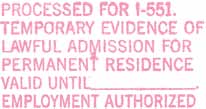
If everything goes well at your adjustment of status interview, the USCIS officer will approve your I-485 application. In some cases the officer may be able to place an "I-551 stamp" inside your passport. Regardless, USCIS will process the new green card and mail to your address on record.
However, USCIS officers may not always provide a decision at the interview. They may tell you that you will receive a decision in the mail. Don’t be discouraged. This isn’t unusual.
It’s also possible that a USCIS officer cannot approve your case because additional evidence is required. If USCIS requests additional evidence, be certain to submit the documentation requested by the deadline issued. USCIS will send you a decision by mail.

Red Flags That Commonly Trigger Delays
- Inconsistencies between forms, spouse answers, or interview responses.
- Thin bona fide evidence in marriage cases (no joint housing/finances or stale evidence).
- Affidavit of Support gaps (income below threshold, missing tax docs, or recent job loss without a joint sponsor).
- Unresolved arrests/immigration violations without required waivers.
Because USCIS must be satisfied on eligibility and admissibility to approve, any gap can push your case into additional review or RFE.
Frequently Asked Questions (FAQs)
How CitizenPath Helps You
CitizenPath’s online service walks you through adjustment of status forms with simple prompts and alerts that catch common errors before you file. Step-by-step instructions help you compile bona fide marriage evidence and a compliant Affidavit of Support. You also get personalized checklists so you arrive at the interview organized and confident at a fraction of typical attorney fees.
Individuals, non-profits and even some attorneys use the service on desktop or mobile device to prepare immigration forms accurately, avoiding costly delays. You can get started and try it for free. We provide support for the Adjustment of Status Package (Forms I-485, 130/I-130A), Affidavit of Support Package (Form I-864), and several other immigration services.
Want more immigration tips and how-to information for your family?
Sign up for CitizenPath’s FREE immigration newsletter and
SAVE 10%
on our immigration services


