The consular interview is the last major hurdle in consular processing — the path to a green card for relatives living outside the United States. By this point, USCIS has approved your petition, you have completed National Visa Center (NVC) processing, and a visa number is available.
The interview itself is typically brief and, for most applicants, straightforward. A consular officer will verify your qualifying relationship, review your documents, and confirm you are not inadmissible under U.S. immigration law. Preparation makes a real difference. This guide walks you through every stage — from gathering documents to crossing the border.

The Purpose of a Consular Interview
A consular officer from the U.S. Department of State conducts your interview at a U.S. embassy or consulate in the beneficiary's home country. The officer has three goals:
- Verify that the qualifying relationship is genuine (for family-based cases)
- Confirm the applicant is not inadmissible under immigration law
- Ensure all required documents are complete and accurate
Most interviews last 15 to 30 minutes. In fact, the vast majority result in approval.
Preparing for Your Consular Interview
Thorough preparation is the single biggest factor within your control. Work through these four steps before your appointment.
Gather Required Documents
Always refer to your appointment letter for the exact requirements at your consulate — requirements vary slightly by country. In general, bring the following:
- Appointment letter — your confirmed interview date and location
- Valid passport — must remain valid for at least six months beyond your intended U.S. entry date
- DS-260 confirmation page — proof that you submitted the DS-260 form, the online immigrant visa application
- Civil documents — birth certificates, marriage certificate, police certificates, divorce decrees, and any relevant adoption records
- Financial support documents — Form I-864, Affidavit of Support, showing that your U.S. sponsor meets the income threshold
- Medical exam results — submitted in advance by your panel physician, or presented in a sealed envelope at the interview
Bring originals whenever possible. Also bring photocopies of everything. If an officer needs a duplicate on the spot, you will be ready.
Complete the Immigration Medical Examination
The immigration medical exam is required before your consular interview. The Department of State requires all immigrant visa applicants to undergo a physical exam by a certified panel physician. Your embassy or consulate provides a list of approved doctors in your country.
The physician submits results directly to the consulate, or you will receive a sealed envelope to bring to the interview. In either case, do not open the envelope under any circumstances.
Schedule your exam well in advance. Results have an expiration date, and expired results can delay your interview.
Review Your Case File and Practice Common Questions
It may have been months or even years since you filed your initial petition. Therefore, before the interview, re-read your DS-260, civil documents, and any statements you submitted. Officers may ask specific questions about dates, addresses, and travel history found in those records.
In particular, for marriage-based immigration cases, consular officers typically ask about how the couple met, relationship history, wedding details, living arrangements during the separation period, and plans after immigration. Review green card interview questions to know what to expect, then practice your answers out loud until they feel natural.
Coordinate with Your U.S.-Based Sponsor
The beneficiary is not the only one who needs to be prepared. Officers may ask questions that require answers consistent with what your U.S. petitioner has previously stated on petitions and affidavits. Discrepancies between the two accounts can trigger additional scrutiny.
Make sure both parties have reviewed the case and are telling the same story — because it is your story. It is also worth reviewing your financial sponsor's income documentation. The officer may ask about the sponsor's household and financial situation, and you should be able to speak to it confidently.
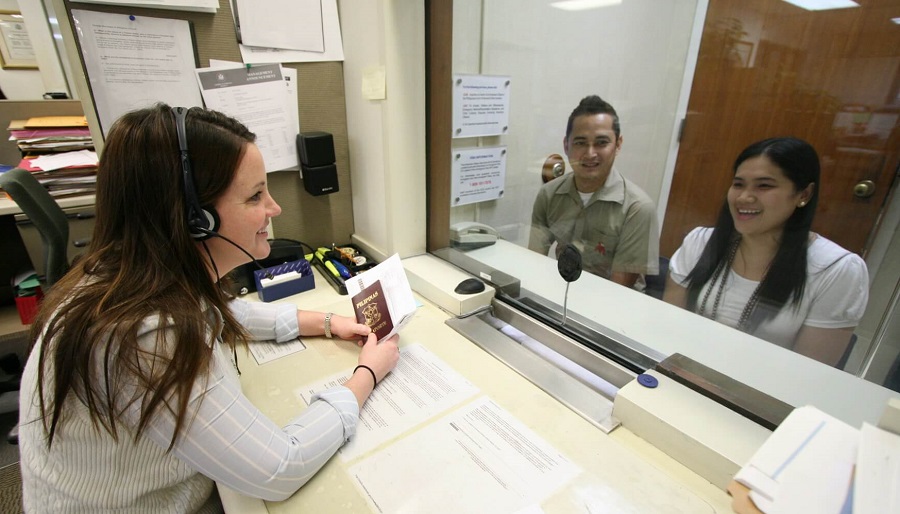
What to Expect on the Day of Your Consular Interview
Here’s what you need to know to ensure everything goes smoothly on the day of the interview:
- Arrive Early
U.S. embassies and consulates have security screening at the entrance. Plan for extra time and arrive well before your scheduled appointment. - Dress Professionally
Business casual attire signals that you are taking the process seriously. - Leave Restricted Items Outside
Many consulates prohibit electronics, large bags, and outside food. Check your consulate's website for specific rules before you go. - Answer Honestly and Consistently
Consular officers are trained to identify inconsistencies. If you do not know an answer, say so. Do not guess or over-explain. - Stay Calm and Polite
The interview is a verification step, not an interrogation. Most officers are professional and efficient.
Possible Outcomes After Your Consular Interview
The officer typically issues a decision at the end of the interview. There are three possible outcomes.
Visa Approval — The officer will keep your passport briefly to stamp your immigrant visa inside it, then return it to you. You will also receive a sealed visa packet. Do not open this packet — hand it to a Customs and Border Protection (CBP) officer at the U.S. port of entry.
Administrative Processing — However, some cases require additional review after the interview. The Department of State may request more documentation or conduct further background checks. There is no fixed timeline. Administrative processing can take weeks or months. You will receive instructions on what to submit and how to monitor your case status through the State Department's Consular Electronic Application Center (CEAC).
Visa Denial — If the officer denies the application, they must cite the specific grounds of inadmissibility or other legal basis for the denial. Depending on the reason, a waiver or appeal may be available. An immigration attorney can help you evaluate your options.
Common Pitfalls to Avoid
Even well-prepared applicants can run into problems. Keep these in mind before your interview.
- Incomplete or Disorganized Documents
Missing documents are one of the most common causes of delays and denials. Use your appointment letter as a checklist, organize everything in advance, and bring a photocopy of every document as a backup. - Inconsistent Answers Between Spouses
For marriage-based cases, both parties may be asked the same questions at different times. Discrepancies, even unintentional ones, can raise doubts about the validity of your relationship. Review your case details together before the appointment. - Inadequate Financial Support Documentation
Confirm that your financial sponsor meets the income requirements and that the I-864 is fully complete and accurate. As a result, incomplete financial evidence is a frequent cause of delays and additional processing.

Arriving in the United States After Your Consular Interview
Once you have your immigrant visa, you can travel to the United States. At the port of entry — usually an international airport — present your documents to a U.S. Customs and Border Protection (CBP) officer. Have your passport, immigrant visa, and sealed visa packet ready. Above all, do not open the visa packet. It must remain sealed and be handed directly to the CBP officer.
Admission at the Port of Entry
The CBP officer will verify your immigrant visa, review the sealed visa packet, and take your biometrics (fingerprints and a photograph). Additionally, they may ask you basic questions about your intended U.S. residence and your petitioner. Answer honestly and consistently with your consular interview.
If admitted, CBP will stamp your passport with a temporary I-551 notation. This serves as proof of lawful permanent residence while you wait for your physical green card. The I-551 stamp also authorizes you to work and travel in the United States during this period.
Receiving Your Green Card
USCIS will mail your green card to the U.S. address on file, typically within two to four weeks of entry. However, it can take longer. If your card has not arrived within 45 days, contact USCIS directly.
Update your mailing address with USCIS immediately if it changes before the card arrives. Additionally, if you requested a Social Security number during the visa application process, your Social Security card will arrive by mail separately, usually within a few weeks of entry.
Consular Interview Frequently Asked Questions

Prepare Your Case with Confidence
For most families, the consular process is manageable without an attorney. CitizenPath's step-by-step preparation service is built for straightforward family-based cases — helping sponsors and beneficiaries get their paperwork right the first time.
Accurate, complete filings reduce the risk of delays and complications at the consular interview. In the current immigration climate, that extra layer of protection matters. CitizenPath offers two packages for families on the consular processing path:
- Immigrant Visa Petition Package — step-by-step guidance for preparing Form I-130, Petition for Alien Relative
- Affidavit of Support Package — helps U.S. sponsors complete Form I-864 accurately, with built-in error checking
Both services are attorney-designed, free to try, and backed by a 100% money-back guarantee.
Want more immigration tips and how-to information for your family?
Sign up for CitizenPath’s FREE immigration newsletter and
SAVE 10%
on our immigration services