
How Long Is an Approved I-130 Valid? What Families Should Know About Case Termination
If you’ve received approval for Form I-130, Petition for Alien Relative, you may wonder how long that approval lasts. Many families cannot move forward right away. Some must wait for a visa. Others need time due to finances or life changes.
Fortunately, your approved I-130 does not “expire.” It remains valid unless something changes the relationship or USCIS revokes it. However, the National Visa Center (NVC) can “terminate” your visa case if you do not respond to required steps.
This guide explains what “validity” really means, how to avoid termination, and what to do if your visa case is derailed.
Key Takeaways
- An approved I-130 usually does not expire on its own.
- Your case can still be “terminated” at the NVC after one year of inaction.
- Termination is about the visa case going inactive, not a timer on your approval notice.
- Many terminated cases can be reinstated if you show the delay was beyond your control and you act in time.
- If the NVC is asking you to act, do not ignore notices or let your case sit for a year.
How Long an Approved I-130 Stays Valid
Generally, an approved I-130 stays valid indefinitely as long as the qualifying family relationship and eligibility remain intact. In other words, the I-130 validity period is indefinite — it does not expire.
But if you are processing an immigrant visa through the NVC or a consulate, there is a separate rule. The government may terminate your immigrant visa registration if you do not take required action within one year after notification in certain situations.
Think of it like this:
- The I-130 approval is the qualifying relationship “green light.”
- The NVC case is the “open file” that must stay active once the government tells you it is time to move.
What “Valid” Means for an Approved I-130
An approved I-130 is a USCIS decision that your family relationship qualifies for immigration. U.S. Citizenship and Immigration Services (USCIS) can later revoke an approval in some situations, but there is no automatic expiration date printed on an I-130 approval notice.
In practical terms, “valid” means:
- The petition can support the next step (green card processing).
- The priority date (if applicable) remains tied to the petition.
- You can move forward when a visa is available and you are ready.
However, “valid I-130” does not guarantee your case stays active at the NVC forever. That is where “termination” comes in.

What “Termination” Means — and What It Does Not Mean
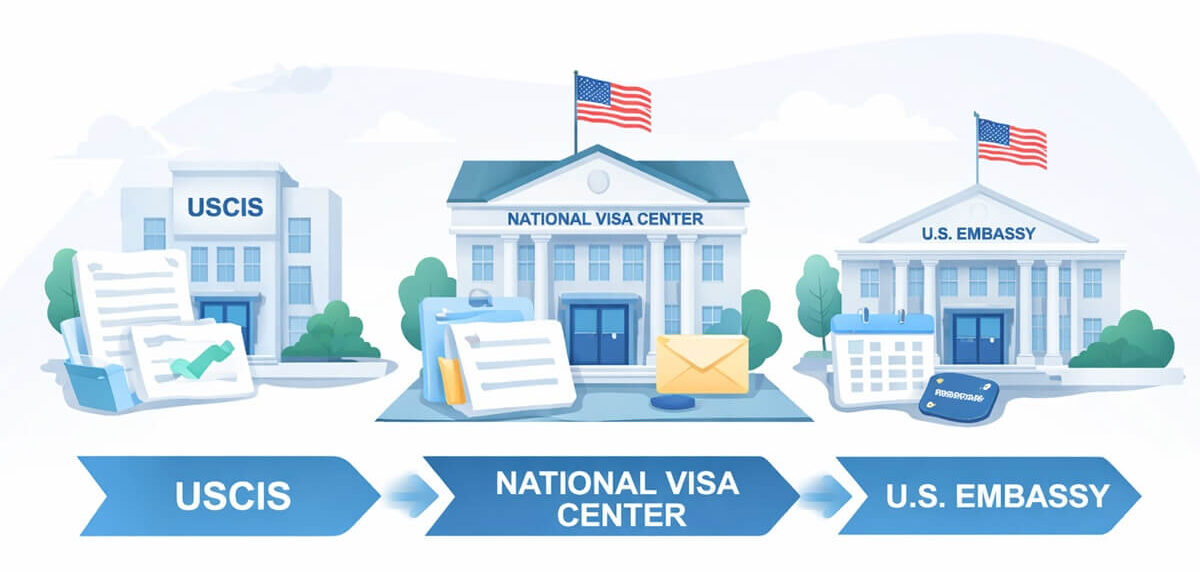
Termination refers to the immigrant visa case, not the petition. After I-130 approval, many cases move to the National Visa Center. If the government notifies you to take action and no response is received for one year, immigration law allows the visa case to be closed for inactivity. This is commonly called termination. In simple terms:
- The I-130 approval usually stays valid.
- The visa case can go inactive if required steps are ignored.
In many situations, a terminated visa case can be reinstated if you act and show the delay was beyond your control.
The Key Distinction: I-130 Validity Period vs. NVC Termination
| Topic | What it means | What can go wrong |
|---|---|---|
| I-130 approval validity | USCIS approved the family relationship petition | It can be revoked or withdrawn if eligibility changes |
| NVC / consular case activity | Your immigrant visa case is moving forward with DOS | It can be terminated under INA 203(g) after one year of inaction in certain scenarios |
The U.S. Department of State explains that registration may be terminated under INA section 203(g) if the applicant fails to apply for an immigrant visa within one year of notice of visa availability, with a possible reinstatement path in some cases.
When You Can Safely Wait After I-130 Approval
Many people worry they are doing something wrong by waiting after I-130 approval. In reality, waiting is often normal and safe, but only in specific situations.
You are generally safe to wait after I-130 approval if a visa is not yet available or you have not received instructions asking you to take the next steps. This is common in family preference categories with long backlogs. During this time, there is nothing you are required to submit, and your approved I-130 typically remains usable.
Here's a simple way to think about it. Waiting is normal if either of the following is true:
- No visa is available yet: There is a wait time for many beneficiaries. To learn more, review our page about how the visa bulletin works →
- The NVC has not invited you to your case: When a visa is becoming available, they will request that you pay fees and submit additional documents. Learn more about NVC processing →
When You Should Not Wait: The NVC One-Year Termination Risk
Your case could be at risk when a year passes with no action taken to advance an NVC case and no communication provided.
The Department of State describes this as a one-year contact/action requirement, and also notes a possible reinstatement window if the reason was beyond the applicant’s control. People run into this at the NVC stage when they fail to:
- Pay fees
- Submit forms and civil documents
- Take action after a refusal under INA 221(g)
- Communicate a need to delay the case
How to Avoid Termination If You Are at the NVC Stage
If the NVC has your case and is asking you to act, your job is simple: do not let your case go “inactive” for a full year after the relevant notice.
Practical ways families often keep momentum:
- Log in and complete required steps in CEAC when available.
- Respond to document requests.
- Follow up if you are stuck or cannot proceed.
Many applicants learn about this rule only after seeing “expiring soon” or a termination warning message in CEAC.

If you have a valid reason for delaying the next step — such as a child finishing school — the key is not to stay silent once the government asks you to act. Timing delays for school, professional assignments, family obligations, or personal readiness are common.
There is no formal “extension form” for an immigrant visa case. Instead, you protect your case by letting the government know you are not abandoning it.
Send a written message to NVC explaining why you need more time and confirming you intend to proceed later. Submitting a request does not guarantee NVC will treat it as an extension, but it shows intent to proceed. Consider involving an attorney to ensure accuracy.
If Your Case Was Terminated, You May Still Have Options
The Department of State explains that a terminated registration may be reinstated if, within one year, the applicant shows the failure to act was due to reasons beyond their control.
What that means in practice:
- You may be able to request reinstatement if you can document why you could not act.
- Waiting too long can reduce your options.
- In some cases, you may need to restart parts of the process.
Since reinstatement is discretionary (not guaranteed), many families choose to work with an immigration attorney to improve their chances. Legal guidance can be especially helpful when explaining delays and navigating communication with the government.
If you want extra confidence when preparing Form I-130, CitizenPath provides clear instructions written for everyday people. The affordable service checks for mistakes and builds a tailored checklist so you know exactly what to submit. You pay only when you’re satisfied and ready to download your I-130 package.
Situations That Can End I-130 Validity
Separate from termination, the I-130 itself can become unusable if eligibility changes. Common examples include:
- Divorce in some spousal-based situations
- Death of the petitioner or beneficiary
- Withdrawal by the petitioner
- Child who ages out
- USCIS revocation after review
USCIS policy explains how revocation can occur in post-adjudication actions.
Frequently Asked Questions About I-130 Validity Period
Want more immigration tips and how-to information for your family?
Sign up for CitizenPath’s FREE immigration newsletter and
SAVE 10%
on our immigration services