
Beneficiary’s Native Written Language: What USCIS Is Asking
If you’re completing a family-based immigration petition, you may pause at this question:
If the beneficiary’s native written language does not use Roman letters, type or print his or her name and foreign address in their native written language.
The section appears on petitions such as Form I-130, Petition for Alien Relative, and Form I-129F, Petition for Alien Fiancé. Many petitioners are unsure what this means or whether they must complete it. This page explains when you should complete it, when you should not, and how to answer it correctly if it applies to you.
Key Takeaways
- The native written language question applies only to non-Roman alphabets.
- If the language uses A–Z letters, the section is not applicable.
- When required, provide the beneficiary’s name and foreign address in their native script, not transliterated.
- If you cannot write the script, explain the limitation on the form.
What USCIS Means by “Native Written Language”
When USCIS uses the term native written language, it refers to the alphabet or writing system used for the beneficiary’s original language.
This question is not about:
- Spoken language
- Preferred language
- English proficiency
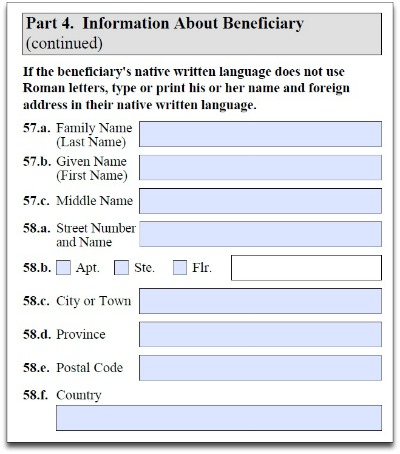
Instead, USCIS wants to know whether the beneficiary’s language uses letters other than the Roman alphabet (A–Z). If it does, USCIS asks for the beneficiary’s name and foreign address written in that original script. USCIS uses this information to accurately identify people and addresses worldwide.
When You May Need to Complete This Section
You should complete this section only if the beneficiary’s native written language does not use Roman letters.
Common examples include languages written with:
- Chinese characters
- Arabic script
- Cyrillic alphabet
- Korean Hangul
- Devanagari script (used for Hindi and others)
In these cases, USCIS wants the beneficiary’s full name and foreign address in their native script. If you are able, type or neatly print the information. Typed text is acceptable.
What If the Petitioner Cannot Write the Beneficiary's Native Written Language?
Some petitioners worry about this requirement because they cannot personally write the beneficiary’s native written language.
For example, a U.S.-born citizen petitioning for a Chinese national spouse may not be able to write Chinese characters. If the beneficiary lives outside the United States, the petitioner may not have access to someone who can write the characters accurately.
If the petitioner is unable to write the beneficiary’s native script, it is acceptable to clearly explain this on the form. In these situations, the petitioner may write a brief statement such as:
“Unable to write Chinese characters and will submit at the time of interview.”
Do not guess or attempt to recreate characters you are unsure about. Incorrect characters can cause confusion later. Instead, if the beneficiary attends a consular or USCIS interview, they can provide their name and foreign address in their native written language when requested.
When You Should Not Answer
Do not re-write a name and address if the beneficiary’s native written language uses Roman letters. Examples of languages that use Roman letters include:
- English
- Spanish
- French
- German
- Portuguese
- Italian
Indicating that the section is not applicable will not cause a problem or delay. Further, do not add translations or repeat the name in English.

Common Mistakes to Avoid
Applicants sometimes run into trouble by overthinking this question. Avoid these common mistakes:
- Writing the name again in English letters
- Translating the address instead of using native characters
- Filling it out when it does not apply
If the language uses A–Z letters, the question about your beneficiary's native written language is not applicable.
If you want extra confidence when preparing Form I-130, CitizenPath provides clear instructions written for everyday people. The affordable service checks for mistakes and builds a tailored checklist so you know exactly what to submit. You pay only when you’re satisfied and ready to download your I-130 package.
Frequently Asked Questions
Want more immigration tips and how-to information for your family?
Sign up for CitizenPath’s FREE immigration newsletter and
SAVE 10%
on our immigration services