
Certificate of Naturalization: What It Is and How to Use It
A Certificate of Naturalization — sometimes called a naturalization certificate — is an official document that proves you became a U.S. citizen through the naturalization process. U.S. Citizenship and Immigration Services (USCIS) issues the certificate at the Oath of Allegiance ceremony after approval of Form N-400, Application for Naturalization. This document is your primary evidence of U.S. citizenship when you apply for a passport, update government records, or petition family members.
Key Takeaways
- A Certificate of Naturalization proves you became a U.S. citizen through the naturalization process.
- The certificate includes your photo, A-Number, and a unique Certificate of Naturalization Number used for identity verification.
- You’ll need the certificate for passports, Social Security updates, REAL ID, and immigration petitions.
- It is different from a Certificate of Citizenship, which applies to people who gained citizenship through parents.
- To replace a damaged or lost certificate, file Form N-565, but use your U.S. passport as proof of citizenship while you wait.
What Is a Certificate of Naturalization?
A Certificate of Naturalization is a government-issued document that confirms you obtained citizenship through naturalization. In fact, it shows that you completed the N-400 process, passed your interview and tests, and took the Oath of Allegiance. Additionally, it includes identifying information such as your photograph, name, date of birth, A-Number, certificate number, and the date you became a U.S. citizen.
Unlike citizenship documents issued at birth, the Certificate of Naturalization is created only after USCIS approves your N-400 application.
What the Certificate of Naturalization Looks Like
Although the design has changed over the years, all certificates include core elements:
- Your full legal name and photograph
- Date of birth and country of birth
- A-Number (Alien Registration Number)
- Certificate of Naturalization Number
- Date and location of your oath ceremony
- USCIS director’s signature
- Raised seal or security features
Older certificates may look different but remain valid as long as the information is correct and readable.
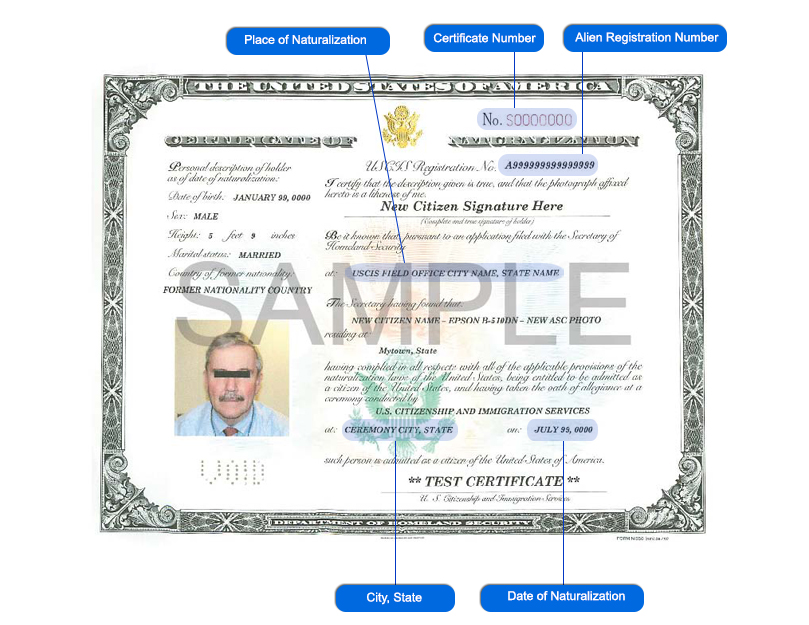
Certificate of Naturalization Number
Your Certificate of Naturalization Number is a unique identifier printed on your certificate.
Where to Find the Number
On modern certificates, the number is located at the top, often labeled “Certificate No.” or “C-Number.”
- It is typically 8 to 10 characters long.
- It is different from your USCIS A-Number, which begins with “A” and appears on your green card and other immigration records.
Why the Certificate Number Matters
Government agencies may request this number when verifying your citizenship or updating your records. In particular, it is commonly required for:
- U.S. passport applications
- Social Security updates
- Employment verification
- Filing immigration petitions for family members
Do not confuse the Certificate Number with your Naturalization Certificate “Receipt” Number or your N-400 case number, which appears on your USCIS notices.
If you want extra confidence when preparing Form N-400, CitizenPath provides clear instructions written for everyday people. The affordable service checks for mistakes and builds a tailored checklist so you know exactly what to submit. You pay only when you’re satisfied and ready to download your N-400 package.
How to Use a Certificate of Naturalization
You will use your certificate as proof of citizenship in many situations. Typically, the certificate is necessary for:
- Applying for a U.S. passport
- Updating your Social Security record to reflect citizenship
- Applying for a REAL ID-compliant driver’s license or state ID
- Verifying your status for employment (I-9)
- Petitioning family members through Form I-130
- Obtaining government benefits that require proof of citizenship
For many of these activities, you should present your original naturalization certificate. However, agencies may also request a photocopy.

Certificate of Naturalization vs. Certificate of Citizenship
These two documents often get confused, but they have different meanings. If you became a citizen after an N-400 oath ceremony, you should have a Certificate of Naturalization. If you became a citizen through your parents, you will instead receive a Certificate of Citizenship.
Certificate of Naturalization
- Issued after filing Form N-400
- Given to permanent residents who become citizens through the naturalization process
- Numbers and format differ depending on the year issued
Certificate of Citizenship
- Issued to people who automatically obtained citizenship from their U.S. citizen parent(s)
- Requires filing Form N-600
- Applies even if the individual never held a green card
How to Replace a Naturalization Certificate
If your certificate is lost, stolen, damaged, or contains incorrect information, you must submit Form N-565, Application for Replacement Naturalization/Citizenship Document, to request a replacement. Then, USCIS issues a new certificate after reviewing your evidence and confirming your citizenship. Processing can take several months, so many people use a U.S. passport as temporary proof.
For step-by-step guidance, required documents, and common issues, see our detailed guide on replacing a Certificate of Naturalization →
Frequently Asked Questions (FAQs)
Want more immigration tips and how-to information for your family?
Sign up for CitizenPath’s FREE immigration newsletter and
SAVE 10%
on our immigration services