
Permanent Resident in Commuter Status and Form I-90 Rules Explained
If you live outside the United States but work in the U.S., you may be classified as a permanent resident in commuter status. This special status allows certain green card holders to live in Canada or Mexico while maintaining U.S. permanent residence.
Understanding commuter status is especially important when you file Form I-90, Application to Replace Permanent Resident Card. Commuters often use Form I-90 to replace an expired card, correct commuter notations, or update their status after work or residence changes.
Key Takeaways
- Commuter status lets some green card holders live in Canada or Mexico.
- Use Form I-90 to update a commuter status green card and status.
- Commuter status limits citizenship, family sponsorship, and travel.
- Moving to the U.S. requires filing Form I-90 and updating status.
What Is a Permanent Resident in Commuter Status?
A permanent resident in commuter status is a lawful permanent resident who lives outside the United States but regularly enters the U.S. for work. U.S. immigration law limits commuter status to residents of Canada and Mexico.
You must physically commute to the U.S. for employment on a regular basis. Remote work or occasional business trips usually do not qualify.
This status allows you to maintain permanent residence without living full time in the United States, as long as your work requires ongoing U.S. entry.
Who Qualifies for Commuter Status?
You may qualify as a permanent resident commuter if all of the following apply:
- You are a lawful permanent resident
- Your residence is in Canada or Mexico
- You regularly enter the U.S. for employment
- Your job requires physical presence in the United States
If your employment ends or no longer requires U.S. entry, your commuter status may no longer be valid.
How Commuter Status Appears on a Green Card
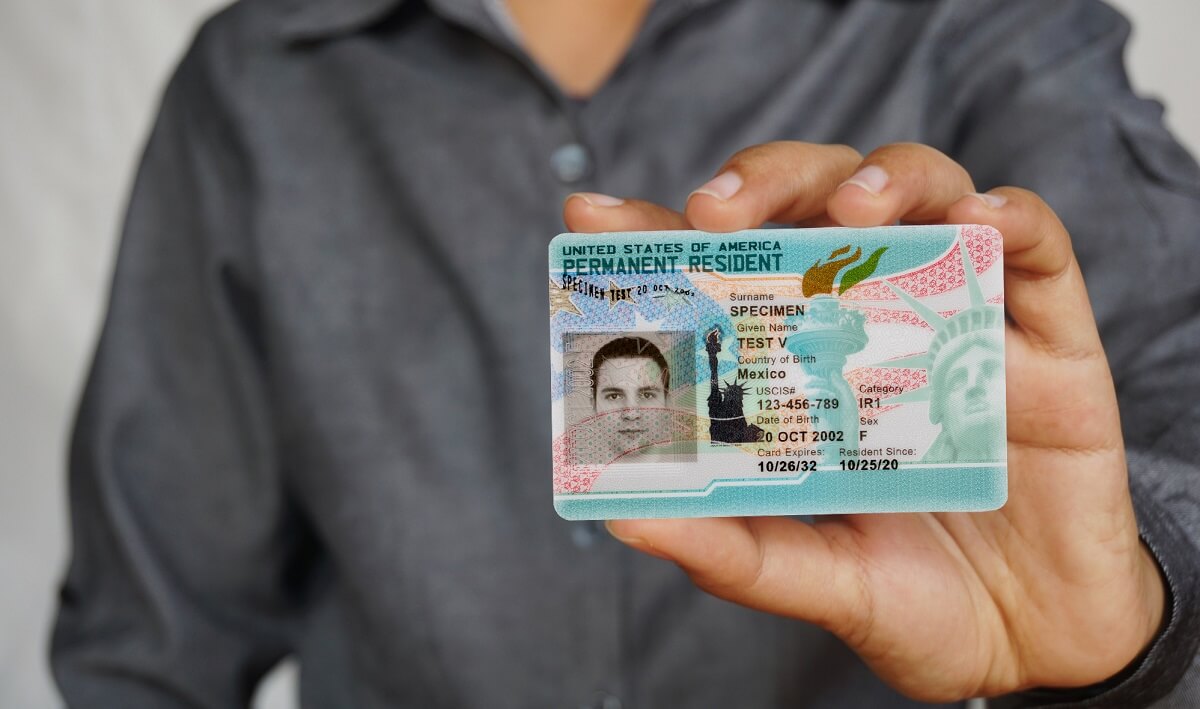
A commuter status green card looks like a standard green card, but there is a special designation for the unique status. USCIS identifies commuter status directly on your green card. On the back side of modern green cards, a code appears at the beginning of the marchine-readable zone. C1 is for a regular permanent resident and C2 is for a commuter.

This notation tells border officers that you are authorized to live outside the United States while maintaining permanent resident status.
If your green card is expired, lost, damaged, or issued with incorrect commuter information, you will typically need to file Form I-90 to receive a corrected or replacement card.
How to Convert to a Permanent Resident in Commuter Status
If you move to Canada or Mexico but want to continue working in the United States, you may need to convert to permanent resident in commuter status.
USCIS generally requires you to file Form I-90 to request this change. By filing Form I-90, you ask USCIS to issue a new green card showing your commuter classification based on your residence and ongoing U.S. employment.

Because living outside the United States can raise questions about maintaining permanent residence, many applicants choose to work with an experienced immigration attorney when requesting commuter status. Professional guidance can help ensure the application clearly reflects your intent to remain a lawful permanent resident while working in the U.S. instead of risking green card abandonment →
Limitation of Rights for Permanent Resident in Commuter Status
Before switching to commuter status, it’s important to understand the tradeoffs. A permanent resident in commuter status has more restrictions than a typical lawful permanent resident who lives in the United States. Compared to a standard green card holder, someone with commuter status generally faces the following limitations:
- Is not eligible to apply for U.S. citizenship until converting to standard lawful permanent resident status and meeting the required residence period (3 or 5 years).
- Cannot sponsor family members for green cards unless the commuter moves to the U.S. and completes the required immigration process, which may take several years for new spouses or stepchildren.
- Must appear at a U.S. port of entry every six months to file Form I-178 and show proof of continued U.S. employment and residence in Canada or Mexico.
- May extend commuter status only by continuing U.S. employment and proving at least 90 days of work in the past year.
- Cannot accept international assignments without risking permanent resident status.
- May have fewer procedural protections than other green card holders, including no right to a formal removal hearing before an immigration judge.
If you want extra confidence when preparing Form I-90, CitizenPath provides clear instructions written for everyday people. The affordable service checks for mistakes and builds a tailored checklist so you know exactly what to submit. You pay only when you’re satisfied and ready to download your I-90 package.
How to Switch from Commuter Status to a Standard Permanent Resident
Commuter status is not permanent. You may need to update your status if:
- You stop working in the United States
- Your job no longer requires regular U.S. entry
- You move to the United States permanently
If you plan to live full time in the United States, you must switch from a permanent resident in commuter status to standard lawful permanent resident status.
USCIS generally requires commuters to file Form I-90 to report the change. When completing Form I-90, you'll select “I am a commuter who is taking up actual residence in the United States” as your application type. By doing so, you request a new green card that removes the commuter notation and reflects U.S. residence.
Before filing, you should already be living in the United States. USCIS may review your residence and employment history to confirm that you are no longer commuting.

FAQs: Permanent Resident in Commuter Status
Want more immigration tips and how-to information for your family?
Sign up for CitizenPath’s FREE immigration newsletter and
SAVE 10%
on our immigration services