U.S. Citizenship Requirements for the General Provision
N-400 Eligibility for a 5-Year Permanent ResidentBecoming a U.S. citizen is a major milestone, and for many permanent residents, the path to naturalization begins with meeting the basic citizenship requirements under the general provision. This option applies to most lawful permanent residents (green card holders) who have maintained their status for at least five years. It's a big step, but understanding the requirements upfront helps avoid delays and denials. This guide explains what’s needed to qualify under the "five-year rule," how to prepare a strong application, and what to expect next as you take the final steps toward becoming a U.S. citizen.

N-400 Requirements for Citizenship Based on Five Years of Permanent Residence
Permanent residents who meet certain requirements may file Form N-400, Application for Naturalization, to request citizenship. The vast majority of permanent residents apply under this general provision and must meet the following citizenship requirements:
When Can I Apply for Citizenship?
If you’ve been a permanent resident for five years, you may be eligible to apply for U.S. citizenship under the general provision — but the rules are more complex than just waiting five years.
To help you get started, we’ve created a Citizenship Eligibility Calculator. Simply enter the “Resident Since” date from your green card, and we’ll show you the earliest date you may file Form N‑400.
Typically, you can file Form N-400 (Application for Naturalization) as early as 90 days before your five-year anniversary. But keep in mind, eligibility depends on more than just time. You must also meet other citizenship requirements, including continuous residence, physical presence, good moral character, and more.

If the calculator shows you're eligible to apply, the next step is to verify you meet other requirements. CitizenPath’s Naturalization Package will help confirm that you meet all the requirements. We’ll walk you through a step-by-step process that:
- Calculates and verifies your continuous residence
- Adds up your physical presence
- Confirms other naturalization criteria
It’s a smarter, more affordable way to apply with confidence on your terms, without the high cost of an attorney.
Continuous Residence Requirement
Continuous residence means living in the U.S. as a lawful permanent resident for five straight years before applying for citizenship (or three years if married to a U.S. citizen) The rule is simple: you must treat the U.S. as your true home and avoid long trips abroad that could disrupt that status.
Short trips abroad typically do not disrupt continuous the residence requirement, but long absences will. Here’s how absences from the U.S. affect your eligibility:
- Trips under 6 months: Generally don’t break your continuous residence requirement.
- Trips between 6-12 months: Create a presumption of breaking your residence. You’ll need to prove your ties to the U.S. (such as maintaining a home, returning to the same job, or keeping family here). This presumption can be difficult to overcome.
- Trips of 1 year or more: Automatically break continuous residence unless you obtained prior approval by filing Form N‑470 to preserve your status.
As a general rule, permanent residents should avoid any trips abroad of 6 months or longer. If the continuous residence requirement is broken, the clock resets: you must start a new period of residency before reapplying. USCIS will calculate eligibility based on the most recent uninterrupted span.
Important Note: A reentry permit allows permanent residents to return to the U.S. after trips of one year (and less than two years), but it does not preserve your continuous residence for naturalization purposes. You are still be required to restart the five-year period.
Physical Presence Requirement
Physical presence refers to the actual time you’ve spent physically inside the U.S. over the required residency period. For most applicants under the general five‑year rule, you must have been physically present in the United States for at least 30 months (at least 913 days) during the five years before filing Form N‑400.
Here’s a breakdown of how it works:
- It’s a cumulative requirement: You must add up each day you were physically in the U.S. across the five‑year period.
- Even brief trips count: Both the day you leave and the day you return are counted as days present in the U.S. for eligibility purposes.
- Not the same as continuous residence: You might maintain continuous residence but still fall short on physical presence if you've spent too much time abroad.
USCIS uses the physical presence requirement to confirm that applicants are genuinely residing in and connected to the U.S. Demonstrating a physical presence of at least half of the five‑year period helps show that the U.S. is truly your primary home.
Citizenship Requirement for Good Moral Character
To become a U.S. citizen, you must show that you’ve had good moral character (GMC) for at least five years before filing (or three years if applying under the spousal rule). This means living by the law, being honest on your application, and meeting basic civic responsibilities.
Most people don’t have serious criminal issues—but minor missteps can still create problems. Here are some common examples:
- Not paying your taxes: Failing to file or owing back taxes without a payment plan can raise red flags.
- Missing child support payments: If you’re legally required to pay support but haven’t, it could affect your eligibility.
- Failing to register with Selective Service: If you’re a male between 18–26 and didn’t register (and were required to), you’ll need to explain why.
USCIS takes these issues seriously. But having a problem doesn’t always mean denial — what matters is how you address it. You may need to provide documentation or show that you’ve taken steps to fix the issue.
Alternative Paths to Citizenship
Citizenship Through Marriage

U.S. Armed Forces
Example Cases Under the 5-Year General Provision
These hypothetical examples highlight four common situations faced by permanent residents applying for U.S. citizenship under the general provision (5-year requirement).

Belinda: Successful Application
- Continuous Residence: Maintained fully since 2020.
- Physical Presence: Has spent well over 30 months in the U.S. over the past 5 years.
- Good Moral Character: No concerns.

Grace: Not Enough Physical Presence
- Continuous Residence: Maintained with no trips exceeding 6 months in past 5 years.
- Physical Presence: Only about 25 months in the U.S.
- Good Moral Character: No concerns.

James: Moral Character Red Flag
- Continuous Residence: Maintained with no trips exceeding 6 months in past 5 years.
- Physical Presence: Fully met with over 50 months in the U.S.
- Good Moral Character: Potential issue due to tax delinquency.
Michael: Break in Continuous Residence
- Continuous Residence: Likely disrupted by a trip longer than 6 months.
- Physical Presence: Has spent over 30 months in the U.S. over the past 5 years.
- Good Moral Character: No concerns.
Frequently Asked Questions about Citizenship Requirements
Complete Guide to the U.S. Naturalization Process
Find information about eligibility, costs, timelines, and how to prepare for the citizenship test all in one place. Visit our hub for citizenship through the naturalization process.
CitizenPath Helps Make Naturalization Easy
How to apply for citizenship with the peace of mind you've done everything correctly
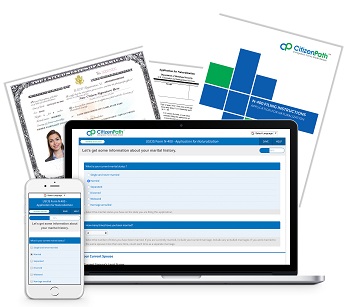
Our affordable, online service makes it easy to prepare Form N-400. You’ll answer simple questions at your own pace, and we’ll check for eligibility — including continuous residence, physical presence, and other key criteria — before you pay. You'll get a ready-to-file application and personalized filing instructions. There's even live customer support and a money-back guarantee that USCIS will approve the application. Learn more about the Naturalization Package >>
STEP 1 | Check Eligibility | |
We're going to ask you a few questions to make sure you're eligible and preparing the correct form. | ||
STEP 2 | Prepare Form N-400 | |
Our software will guide you through the N-400 application using simple step-by-step instructions. | ||
STEP 3 | Download, Print and File | |
Once you're completely satisfied, you’ll be able to print your N-400 and customized filing instructions. | ||